
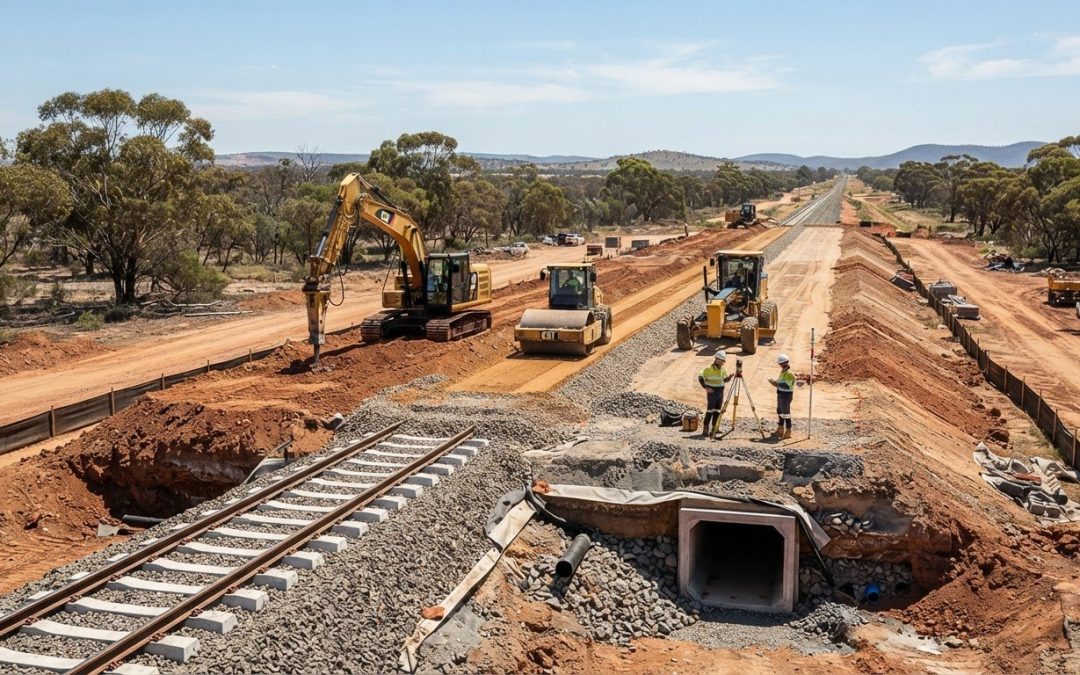
What if the most important part of a rail formation is what you can’t see once the track is in place? Rail formation earthworks prepare and shape the ground beneath the track structure. Their quality depends on more than moving soil: ground conditions, drainage and material suitability all influence how the work should be planned, carried out and verified.
The boundary between formation works and track construction can be unclear. A sound design also needs to become a practical sequence on site, with checks that demonstrate the specified requirements have been met at each stage.
This guide explains what rail formation earthworks involve, how they relate to the track structure and which project conditions shape delivery. It also outlines how standards such as AS 7638:2022, project specifications and asset-owner requirements can guide planning, construction and verification. You’ll find practical guidance on assessing ground, drainage and materials, as well as the records that help demonstrate the formation has been built to the required standard.
Key Takeaways
- Rail formation earthworks prepare the ground platform beneath the track. Define the boundaries between formation work, track laying and adjoining scopes before construction starts.
- Use the approved design and site investigation to plan each stage, from ground preparation and layer construction through to verification and handover.
- Assess ground conditions, materials and drainage together. Variable ground, rock and wet areas can each affect project-specific design responses and evidence requirements.
- Set out approved documents, responsibilities, inspections, records and interfaces before work progresses, so requirements are clear at every handover point.
- McMahons Civil and Contracting PTY LTD delivers Earth Works and rail services with a quality-focused, safety-conscious and budget-driven approach.
What Rail Formation Earthworks Include and Why They Matter
Rail formation earthworks prepare and construct the ground platform that supports the track structure. The scope can include shaping existing ground, managing unsuitable material and building specified earthwork layers to the design. It is distinct from laying rails, sleepers and ballast, although the formation must be ready to receive those adjoining track components.
This distinction matters on site. Earthworks establish the platform and its required condition; track construction installs the components above it. Drainage works, structures and services may also meet the formation at defined interfaces. Clear scope boundaries help teams coordinate levels, access and handover, rather than treating every activity as one undifferentiated package. The broader role of earthworks in transport infrastructure is outlined in Earthworks in civil engineering.
How rail formation relates to the track structure
The formation is the prepared support beneath the track structure, while the subgrade refers to the underlying ground or earthworks at the base of the designed support profile. Above it, specified formation layers may provide the designed platform. Ballast, sleepers and rails sit higher in the track structure. Project documents may use these terms differently, so use the drawings and specifications to confirm the intended terminology and boundaries.
Conceptual cross-section, top to bottom:
Rails and sleepers: track components
Ballast: track support layer
Specified upper formation layer or layers, where required
Formation platform or formation level
Prepared subgrade and underlying ground or earthworks
This is a guide to the relationship between components, not a standard build-up. Layer names, materials and thicknesses depend on the approved design and project terminology. Formation preparation may include trimming, conditioning or placing designed material, but it does not include installing the track above it.
Why ground preparation and water management matter
Ground conditions can vary along a rail corridor. Changes in soil, existing fill, rock or wet areas may affect formation preparation, but they do not prescribe a solution on their own. Investigation findings and design requirements should guide the response, including which material is suitable and what condition must be achieved before the next layer is placed.
Water needs equal attention. Uncontrolled surface water or seepage can soften or disturb exposed formation, affect material handling and make construction access difficult. Coordinate drainage interfaces with the earthworks sequence instead of leaving them until the platform is complete. The drainage arrangement itself must follow the project design.
In plain terms, rail formation is the designed and prepared ground platform beneath the track, built to support the specified track structure. Its performance depends on the relationship between the ground, formation layers, drainage and project requirements. Plan rail formation earthworks around site evidence and verify them against approved documents, rather than assuming a typical cross-section will apply.
How Rail Formation Earthworks Progress from Investigation to Construction
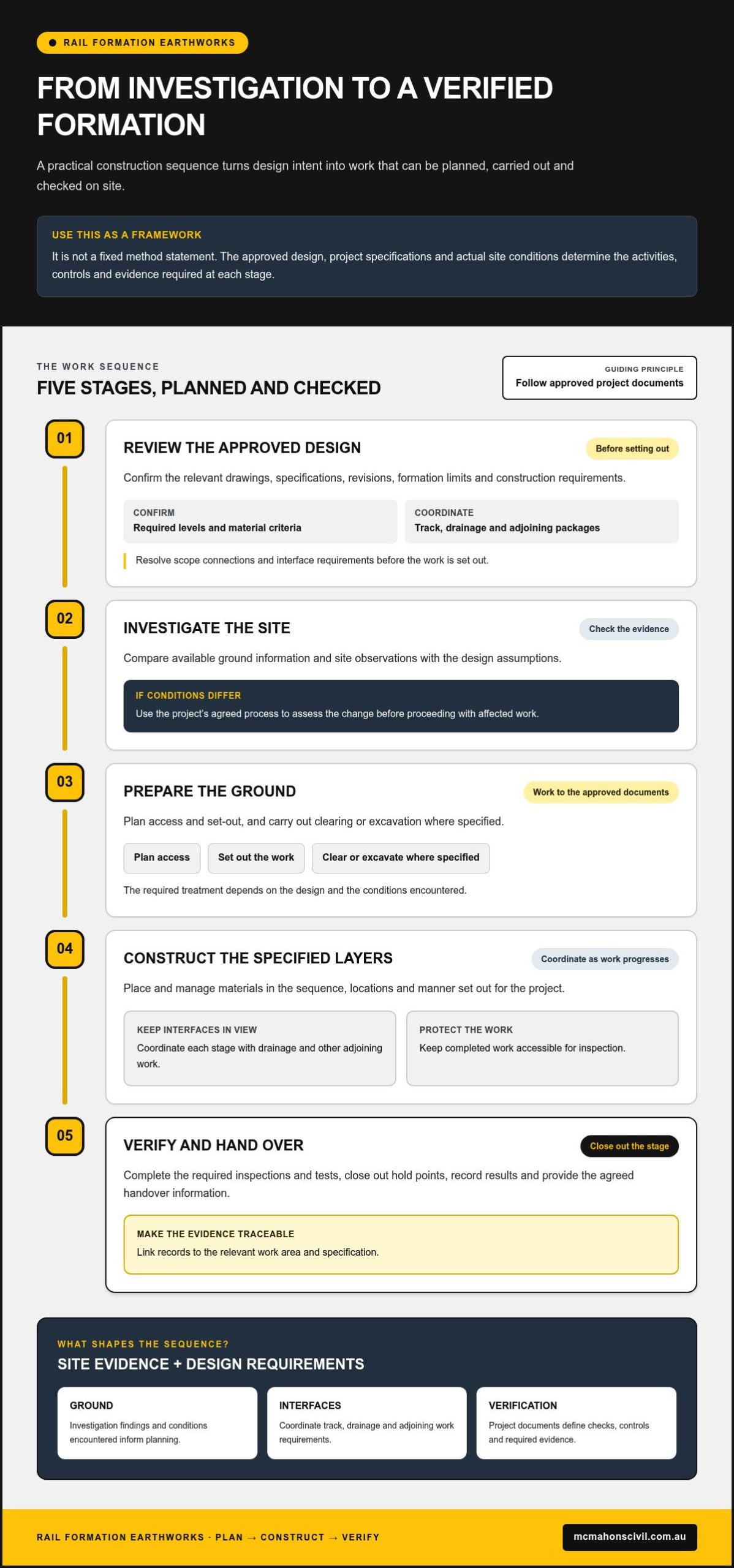
A workable construction sequence turns design intent into tasks that can be planned, carried out and checked on site. For rail formation earthworks, the sequence below is a practical framework, not a fixed method statement. The approved design, project specifications and actual site conditions determine the activities, controls and evidence required at each stage.
From design review and site investigation to a work plan
Before work starts, review current drawings and specifications alongside available ground information, survey data and interface requirements. Identify the limits of the formation scope, required levels, material criteria, drainage connections and designated inspection or approval points. Site investigation findings help the project team plan preparation and controls, but they do not replace project-specific design decisions or acceptance requirements.
- Review the approved design. Confirm the relevant drawings, specifications, revisions, formation limits and construction requirements. Resolve how the earthworks connect with track, drainage and other adjoining packages before setting out the work.
- Investigate the site. Compare available ground information and site observations with the design assumptions. If conditions differ from the documents, use the project’s agreed process to assess the change before proceeding with affected work.
- Prepare the ground. Plan access and set-out, and carry out clearing or excavation where specified. Prepare the working surface in line with approved documents; the required treatment depends on the design and conditions encountered.
- Construct the specified layers. Place and manage materials in the sequence, locations and manner set out for the project. Coordinate each stage with drainage and other interfaces so completed work is protected and accessible for inspection.
- Verify and hand over. Complete required inspections and tests, close out hold points, record results and provide the agreed handover information. Link evidence to the relevant work area and specification requirements.
Preparing, placing and verifying formation layers
Layer placement should follow the approved construction documentation, including the specified sequence and controls. Hold points provide planned opportunities for review before work proceeds beyond a defined stage; their location and release process are project-specific. Collect inspection records, test results and any required survey information as work progresses, rather than trying to reconstruct them at handover. Clear construction records make conformity with project specifications demonstrable.
Staging also shapes the method. Restricted access, rail possessions or coordination with other site activities may affect where crews work and how materials reach the workface, subject to project arrangements. Culverts, bridges and drill-and-blast activities may be part of a wider rail project, but they are not universal formation steps. Where they apply, define ownership, timing and physical interfaces in the work plan so they connect with the earthworks scope without being treated as the same activity.
McMahons Civil and Contracting PTY LTD delivers Earth Works and rail services as part of its civil infrastructure work. For a project-specific approach to delivery, explore McMahons Civil and Contracting PTY LTD.
Choosing Formation Materials and Controls for Different Ground Conditions
Formation materials and construction controls should respond to the ground actually encountered while meeting the approved design and applicable project specifications. A ground condition is a reason to assess the design response, not an instruction to use a particular treatment or material. The comparison below is a planning aid, not a set of prescribed solutions.
How ground conditions shape formation decisions
Investigation findings give designers and delivery teams a basis for assessing how ground conditions may affect formation construction. Variable ground, exposed rock and wet areas can each raise different questions about preparation, material suitability, drainage interfaces and sequencing. The appropriate response must come from the project design and authorised technical decisions, rather than assumptions based on a condition’s name.
Rock breaking may be relevant where site conditions and the design require it, but it is not a standard step on every rail project. At planning stage, identify known ground changes and consider how access, material handling and inspection may be affected. Keep those practical considerations separate from treatment decisions, which must be supported by the project’s design process.
Ground condition: Variable ground. Design response: Refer to investigation findings and the approved design for any required preparation or material treatment. Drainage consideration: Check how changes in ground relate to designed water pathways and adjoining drainage works. Verification evidence: Retain relevant inspection, survey or test records specified for the work.
Ground condition: Rock. Design response: Confirm the designed formation profile and whether rock breaking or other work is required. Drainage consideration: Coordinate formation levels and drainage interfaces as shown in project documents. Verification evidence: Record inspections and completed work against the applicable drawings and requirements.
Ground condition: Wet areas. Design response: Use site information and approved design decisions to determine preparation and material requirements. Drainage consideration: Consider water movement and the timing of connected drainage provisions. Verification evidence: Keep records showing that inspections and any specified checks were completed.
Drainage, layer materials and specification controls
Drainage and formation need coordinated design interfaces. Drainage provisions may affect where water is managed in relation to the platform, while earthworks staging can affect when those provisions are installed or protected. This section does not prescribe a drainage layout: drawings, specifications and interface responsibilities should define the arrangement for each project.
Take material descriptions, layer requirements, testing and acceptance criteria from approved project documentation. Avoid applying generic compaction figures, gradings or thresholds where the design has not specified them. For Australian projects, AS 7638:2022 is a railway earthworks reference identified in current guidance. Confirm its current status and applicability alongside the relevant infrastructure owner’s requirements and project documents before relying on it.
Clear controls make rail formation earthworks easier to plan and verify. Link each specified material and inspection requirement to the relevant work area, so records explain what was placed, what was checked and how the work relates to the approved design.
Planning Rail Formation Quality, Interfaces and Handover
Quality planning makes project requirements visible before work reaches an inspection point or handover. For rail formation earthworks, the aim is to show that completed work has been assessed against the approved design and the project’s stated acceptance process, not against assumed industry-wide values. A clear checklist also helps teams keep responsibilities and records aligned as construction progresses.
- Approved documents: Identify the current drawings, specifications, work plans and relevant revisions that govern the formation scope.
- Responsibilities: Set out who carries out the work, who inspects it, who reviews results and who can release project-defined hold points.
- Inspection and testing: Map required checks to the stages and locations specified in the project documents, including how results are assessed.
- Records: Establish how inspection records, test results, survey information and approved design changes will be identified, stored and submitted.
- Interfaces: Agree boundaries, sequencing, access and handover points with adjoining work packages before activities overlap.
Coordinating earthworks with adjoining rail scopes
Formation work may connect with drainage, culverts or other rail construction scopes where these are part of the project design. The interface plan should identify who provides each component, which levels or limits must meet, when the work needs to be completed and what condition is required before the next activity begins. This clarifies dependencies without treating every scope as part of every formation contract.
For example, if a designed drainage connection crosses a formation work area, the programme should show how its installation relates to earthworks placement and inspection. The project team can then coordinate access and sequencing and establish who accepts the interface. Bridges, culverts and drill-and-blast work may apply to particular projects, but they are not universal formation requirements.
Records that support inspection and handover
Handover records should make it possible to trace completed work to the requirements that govern it. Depending on the project, relevant document categories may include inspection records, test records, survey information, material documentation, non-conformance close-out and approved design revisions. Include only records required by the project, and follow its specified review and acceptance process.
A simple record template can prompt consistent entries, but it does not replace approved project forms or procedures:
Example fields: work area or location; drawing and revision; activity or layer inspected; date; applicable specification clause or acceptance criterion; inspection or test reference; result and status; reviewer or sign-off, where required; follow-up action; linked record identifiers.
Check that records identify the relevant location and document revision, and that changes are authorised and recorded through the project’s process. This creates a clear handover trail rather than a bundle of results with no obvious link to the work. McMahons Civil and Contracting PTY LTD delivers civil and rail work with a quality-focused, safety-conscious approach. Discuss your rail earthworks project.
Delivering Rail Formation Earthworks with McMahons Civil and Contracting PTY LTD
Rail formation work calls for a practical connection between the project design, ground conditions and construction sequence. McMahons Civil and Contracting PTY LTD delivers Earth Works and rail services as part of its civil infrastructure work, bringing these capabilities together to support project-specific delivery. Its approach is quality-focused, safety-conscious, deadline-aware and budget-driven, with planning shaped around the requirements and complexity of each project.
Workmanship and coordination remain central, alongside clear scope boundaries and delivery to approved project documents. For broader context on earthworks planning and site preparation, see this structural earthworks reference.
How civil earthworks capability supports rail projects
Earth Works capability provides a relevant foundation for rail formation delivery, where preparation and construction must align with project-specific design requirements. Planning can account for the defined scope, site information, access and adjoining packages, with quality workmanship and safety-conscious practices guiding delivery. Each project is approached according to its documented requirements.
Rail formation is part of a wider civil construction environment, where sequencing and clear scope boundaries help connect separate activities. Explore McMahons Civil and Contracting PTY LTD’s civil contracting services for broader service context.
What to prepare when scoping a formation project
Gather the information that defines the work and its interfaces. This gives the project team a practical basis for shaping delivery around the actual scope and site conditions.
- Current project drawings and specifications, including relevant revisions.
- Available site, ground and survey information.
- Defined scope limits and drainage or adjoining interface requirements.
- Inspection, verification and handover requirements in project documents.
- Known access, staging and coordination constraints.
With this information, McMahons Civil and Contracting PTY LTD can plan a project-specific approach to the Earth Works and rail scope. The company’s background includes over 18 year’s Experience, alongside two decades of experience in rock pitching and civil construction.
For a project discussion, outline your formation scope and requirements to McMahons Civil and Contracting PTY LTD.
Set Your Formation Project Up for a Clear Start
The next step is to turn project information into a shared starting point. Bring together the current drawings, specifications, available site information and known interface requirements. Use them to define the formation scope and the decisions that need coordination before work begins. A clear brief helps align planning with actual site conditions and gives the project team a practical basis for discussing delivery.
McMahons Civil and Contracting PTY LTD delivers earthworks and rail services for civil infrastructure, with a quality-focused, safety-conscious and budget-driven approach. For a project-specific discussion, share the scope and available information so the delivery approach can be considered in context.
Discuss your rail formation earthworks project with McMahons Civil and Contracting PTY LTD. A considered plan and clear communication give your team a practical foundation for the next steps.
Frequently Asked Questions
What is the difference between rail formation earthworks and track laying?
Rail formation earthworks prepare the support platform, while track laying installs the rails, sleepers and associated track components above it. On a project, this boundary matters at handover: the formation team completes and presents its specified work, and the track team proceeds when project requirements for that interface are met. Contract documents should identify who is responsible for setting levels, protecting completed work and accepting the transition.
What ground investigations are used for rail formation projects?
Investigation may combine a review of existing geotechnical and site records with fieldwork selected for the project. Depending on the design questions, this could include boreholes or test pits, sampling, in-situ testing and observations of groundwater or existing fill. These are examples, not a standard package for every corridor. Set the investigation scope according to the project’s geotechnical requirements and ensure it provides information relevant to the proposed formation design.
Can rail formation earthworks be carried out in wet conditions?
Whether work can proceed depends on site conditions, the approved method and project controls. Rain or seepage may affect access, handling and the condition of exposed ground or placed material. For example, a work area that becomes soft after rainfall may need assessment before vehicles or further construction use it. Decisions should follow the project’s safety, environmental and quality processes, rather than a general rule that wet-weather work is always acceptable or prohibited.
Why is drainage considered during rail formation design?
Drainage is considered because water movement can influence the condition of the ground and formation materials, as well as how the site can be constructed and maintained. A design review can identify where formation levels meet drains, outlets or cross-drainage structures, and where those connections affect sequencing. For instance, an outlet location may need coordination with the formation profile so the earthworks and drainage packages meet documented interface requirements.
Do rail formation projects all use the same earthworks materials?
No. Material selection depends on the design, ground information and requirements for the particular project. A material suitable for one part of a corridor may not meet the specified requirements elsewhere, especially where ground conditions change. Use the project documents for material descriptions, testing and acceptance criteria. If proposed material or encountered ground differs from the design assumptions, follow the project’s review and approval process before proceeding.
Which standard applies to rail formation earthworks in Australia?
AS 7638:2022, Railway Earthworks, is the Australian Standard identified for railway earthworks. Its relevance must still be considered alongside the project specification and the requirements of the relevant rail infrastructure manager, which may have network-specific documents. Confirm the standard’s current status and project applicability before relying on it. A standard reference does not replace the approved design, contract documents or applicable asset-owner requirements for the work.
What records are useful at rail formation handover?
Useful handover records are those required by the project and traceable to the completed work. They may include signed inspection records, test results, survey information, material documentation, approved drawing revisions and closed-out non-conformance records. Identify each item by work area, date and relevant document revision so reviewers can connect evidence to the correct location and requirement. The project’s stated acceptance process determines which records are needed and how they are submitted.