
An inspection record can be complete on paper and still fail to show that the work meets the project requirements. A civil works quality assurance plan must do more than collect forms: it should connect each site activity to the applicable specification, inspection, acceptance criteria and evidence. If you’re unsure which requirements belong in the plan, or whether a hold point, test result or approval could be missed before work is covered, start by tracing the requirements from the contract documents to the checks planned on site.
The practical test is whether the plan helps the team make the right check at the right time, then resolve and record any issue before handover. This guide provides a checklist for building or reviewing a project-specific plan, checking it against contract documents and relevant standards, and confirming that records can be used as evidence. It also explains how controls should reflect the work being delivered, from earthworks and concrete to rock pitching and paving, rather than relying on generic paperwork. You’ll be able to trace requirements through site work to close-out with greater confidence.
Key Takeaways
- Build the civil works quality assurance plan from the contract scope, drawings, specifications and client acceptance requirements.
- Use a requirements register to assign each obligation an owner, work activity, check and record.
- Understand how the project-wide plan, activity-level ITPs and inspection records work together. Document names and approval steps can vary by contract.
- Before work starts, confirm approved documents, responsibilities, materials, equipment and inspection arrangements are in place.
- When assessing a contractor, ask for scope-specific examples and check how issues are closed out and quality information is communicated.
What a civil works quality assurance plan does on an Australian project
A civil works quality assurance plan is a project-specific system for meeting and demonstrating defined quality requirements. It turns contract obligations into practical controls across procurement, construction, inspection, corrective action and handover. The aim is not simply to produce records. It is to make sure requirements are understood before work starts and checked as work proceeds.
Quality assurance focuses on planning and checking the processes used to achieve the required result. Quality control checks work or materials against acceptance criteria. The two work together: a procurement check might confirm that materials meet the project specification, while a site inspection checks completed work against the specified requirements. The broader principles of Quality Assurance include fitness for purpose and doing work right first time, but the project documents determine what those principles mean in practice.
There is no single template that suits every civil project. The contract, drawings, client requirements and applicable specifications set the scope and acceptance requirements. Confirm which document versions apply, then make sure the planned controls reflect them.
What belongs in a civil works quality assurance plan?
The plan should set out the work scope, responsibilities, document control arrangements and a register of project requirements. It should connect each activity to its acceptance criteria, inspection method, responsible person and required evidence. Controls need to suit the work: earthworks, concrete, rock pitching and paving, for example, involve different checks and records.
- Scope and requirements: identify relevant contract documents, drawings, specifications and client acceptance requirements.
- Responsibilities: state who performs, witnesses, reviews and approves each check, as required by the project.
- Activity controls: link the work to inspection methods, acceptance criteria and records.
- Document control: make sure the team uses approved, current documents and records revisions appropriately.
Why does a plan need to work on site?
A control only helps if the people doing the work know what to check, when to check it and who is responsible. Clear inspection arrangements reduce the risk of missed checks or work proceeding before a required inspection. If a result doesn’t meet the acceptance criteria, the process should show how to record the issue, address it and verify the outcome before close-out.
Useful records identify the activity and location, date, result and responsible person. They should also link the check to the relevant requirement and show how any issue was resolved. This gives the project team a practical handover record, rather than a collection of forms with little context.
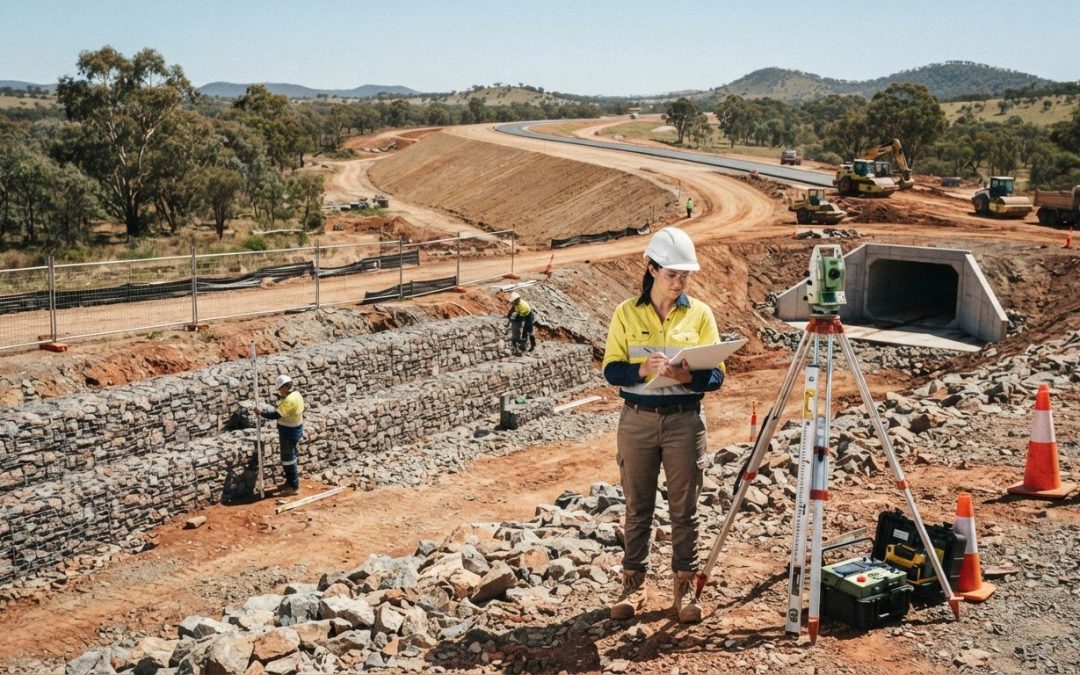
A quality assurance plan links project requirements to site checks and verifiable evidence.
Build the civil works quality assurance plan around project requirements
Start with the documents that define the work: the agreed scope, contract documents, drawings, specifications and client acceptance requirements. The civil works quality assurance plan should reflect these project-specific obligations, not rely on a generic template or assumed industry practice. Check that the documents are approved and current, then identify which requirements apply to each part of the scope.
How do you turn specifications into checkable requirements?
Extract requirements that can be assessed, and record their source and revision so the team can trace each check to the governing document. If a requirement is unclear, conflicting or incomplete, flag it for resolution through the project’s agreed review and approval process. Don’t fill gaps by assuming what the client intends.
A requirements register makes these connections easier to review. For each obligation, capture:
- Source: document title, drawing or specification reference, and revision.
- Application: the relevant work activity and location.
- Responsibility: who carries out the check and who reviews or approves it, where required.
- Verification: the acceptance criteria and inspection or other verification method.
- Evidence: the record needed to show the check was completed and its outcome.
Controls should reflect the activity. Earthworks, concrete, rock pitching and gabion installation may each require different acceptance criteria, inspection arrangements and records. Use the project documents to determine what applies. Don’t assume the same tests or evidence suit every scope.
Who owns quality checks and controlled documents?
Assign responsibility for inspections, approvals, records and document updates before work begins. Site personnel need a reliable way to access current drawings, work methods and approved revisions. Superseded documents should be identifiable so they aren’t used by mistake. Where the contract requires it, include approved materials, supplier records and traceability information in the register, and define how they will be maintained.
For example, a scope involving structural earthworks and bulk site preparation should have controls linked to that work’s contract requirements, rather than a checklist copied from an unrelated activity.
Before accepting a plan, trace a sample requirement from its source document through to the site check and completed record. If a link is missing, clarify the process and responsibility. For a project involving civil, mining or rail work, reviewing a contractor’s relevant capabilities can also help you assess whether its experience aligns with the scope. McMahons’ civil contracting capabilities provide one point of reference.
Quality assurance plan, ITP and quality control: what each one does
These documents serve different purposes, but should work together. The civil works quality assurance plan sets the project-wide approach; an Inspection and Test Plan (ITP) breaks that approach into checks for a specific activity; and inspection records capture what was checked and the result. Document names, formats and approval processes can vary by contract and client, so confirm the required arrangements for each project.
| Document or control | Purpose | Typical content or evidence |
|---|---|---|
| Quality assurance plan | Sets the project-wide framework for managing quality. | Scope, responsibilities, document control, processes for managing issues and handover records. |
| ITP | Defines checks at stages of a particular work activity. | Work stages, inspection or test method, acceptance criteria, responsible parties, required records and any hold or witness points. |
| Inspection record | Shows what happened during a particular check. | Relevant activity and location, date, result, responsible person and supporting evidence. |
How does an Inspection and Test Plan fit into the wider plan?
An ITP translates project requirements into a sequence the site team can follow. For each work stage, it should identify the check, acceptance criteria, who performs or witnesses it, and the record required. Inspection frequency and evidence must come from the applicable project documents, not a generic assumption.
Some contracts identify hold points, where work must not proceed until the specified release or approval is given, and witness points, where a nominated party may attend or observe a check. Their meanings and release processes can differ. Confirm the project’s definitions, notification requirements and authorised approvers before relying on them.
Safety and quality documents have distinct purposes. Safety documentation addresses hazards and safe work; quality documentation addresses conformity with project requirements. They can be coordinated on site, but one doesn’t replace the other.
How should a team manage non-conformances and corrective action?
If work or a result doesn’t meet a requirement, record the issue, affected work and relevant evidence. Document the assessment, agreed action, responsibility and verification needed to close it. Correcting the immediate issue may be enough in some cases. Where appropriate, also consider and address its cause to reduce the risk of recurrence.
A non-conformance is closed when the agreed action and its outcome are documented, not when someone confirms it verbally. Keep the close-out evidence with the relevant project records so it can be reviewed during delivery and handover.

Civil works quality assurance plan checklist for pre-start and site delivery
Use this sequence to check that the plan is ready for site use and that evidence stays current as work progresses. Review the civil works quality assurance plan against the project documents. Don’t treat it as a one-off form to complete before mobilisation.
What should be checked before work starts?
- Confirm the scope and source documents. Check the plan against the current contract scope, approved drawings, applicable specifications and client requirements. Note document revisions so the team can identify which versions govern the work.
- Check responsibilities and communication. Confirm who performs and reviews inspections, manages records, updates controlled documents and seeks approvals. Site personnel should know where to access current drawings and work methods.
- Review activity-level ITPs. Make sure required inspections, acceptance criteria, hold or witness points, evidence owners and release arrangements are identified. Confirm that technical tests, tolerances and inspection frequencies come from project requirements or have been verified with the appropriate project representative.
- Verify readiness. Check materials, suppliers, equipment and personnel requirements against the project documents. Confirm required inspection arrangements are in place before the relevant work begins.
What evidence should be reviewed during construction?
- Match records to the work. Check that completed inspection records identify the relevant activity and location, reference the applicable acceptance criteria, and show the date, result and responsible person.
- Track changes and issues. Review document revisions, approvals, non-conformances and outstanding actions. Confirm affected work has been assessed and that actions are supported by evidence before they are marked closed.
- Check close-out progressively. Keep records organised as the work advances, rather than leaving gaps to resolve at handover. Confirm required approvals and supporting evidence are available for completed activities.
For a rock work scope, use the contract documents to determine the relevant checks and records, rather than applying controls copied from another activity. Professional rock pitching for civil and mining infrastructure is one example of a work scope where the plan needs to reflect the project’s own requirements.
A useful review asks whether a site team can follow each requirement through to the check, result and close-out record. That discipline also provides a practical basis for assessing a contractor: ask how its experience and proposed approach align with the work, and how it will manage project-specific checks and evidence. McMahons’ civil and contracting capabilities are available to review when considering a contractor for your project.
Use quality assurance evidence to assess a civil works contractor
A contractor’s quality approach is easier to assess when you can see how it applies to work like yours. Ask for scope-specific examples of inspection records, approvals and issue close-out, subject to confidentiality and project permissions. The aim isn’t to collect paperwork for its own sake. It’s to understand whether the proposed process connects project requirements with checks on site and clear evidence of outcomes.
What questions should clients ask before awarding civil works?
Use the discussion to test how the contractor will manage the work in practice. Ask:
- How will project requirements be mapped to inspections, approvals and records for this scope?
- Who is responsible for inspections, document revisions, site issues and corrective actions?
- How will the project team communicate changes, inspection outcomes and matters requiring client input?
- Can you provide relevant examples of completed records or issue close-out, with confidential details removed or permission obtained?
Check that responsibilities and communication routes are clear before work begins. A plan may appear complete, but uncertainty about who updates a drawing, notifies the client or confirms an action is closed can create avoidable gaps. For a civil works quality assurance plan to be useful, its proposed controls need to match both the contract requirements and the contractor’s actual scope.
Match capability to the project rather than relying on broad claims. McMahons Civil and Contracting’s confirmed work includes civil, mining and rail infrastructure, with earthworks, rock pitching, gabion baskets, concrete works, retaining walls and paving among its listed capabilities. Its comprehensive civil contracting services page provides an overview to compare with your project scope. Assess the proposed delivery approach and evidence directly; don’t assume a particular certification or quality system without verification.
How can the plan support an orderly project handover?
Handover is more straightforward when evidence requirements are identified early and checked as work progresses. Confirm the contract’s required records and formats, then track relevant inspection records, approvals, test results and close-out evidence against that list. Resolve missing items while the people, information and work details are still accessible, rather than leaving the review until the end.
Before appointing a contractor, discuss how handover responsibilities will be managed and how outstanding actions will be reported. For civil, mining or rail work, McMahons’ website provides information to help you consider whether its confirmed capabilities align with the scope.
Make quality evidence part of delivery from day one
A reliable civil works quality assurance plan connects project requirements with site checks, clear responsibilities and records that can be reviewed at handover. Start with the contract documents, translate applicable requirements into activity-specific inspections and acceptance criteria, then document approvals and issues through to close-out.
When assessing a contractor, look beyond the plan’s title. Ask how the proposed controls suit your scope, who manages revisions and inspections, and what evidence can be shared for comparable work. These practical questions help establish whether quality processes are understood and ready to be applied on site.
McMahons Civil and Contracting has more than 18 years of operating history, with confirmed capability across civil, mining and rail infrastructure work. If you’re considering a project in these areas, discuss your civil project requirements with McMahons.
With clear requirements, consistent checks and traceable records, your team can approach delivery and handover with greater confidence.
Frequently Asked Questions
What should a civil works quality assurance plan include?
A civil works quality assurance plan should set out how the project’s defined quality requirements will be met and evidenced. Include the work scope, applicable contract documents and specifications, responsibilities, document control arrangements and a requirements register. Link each relevant activity to its acceptance criteria, inspection method, responsible person and required record. Include project-specific approvals and processes for managing issues, then check that the plan matches the contract rather than relying on a generic template.
What is the difference between a quality assurance plan and an ITP?
A quality assurance plan describes the project-wide approach to managing quality, while an Inspection and Test Plan (ITP) sets out the checks for a particular activity or work stage. An ITP typically identifies inspection methods, acceptance criteria, responsibilities and records, including any contract-defined hold or witness points. Inspection records then document the checks performed and their results. Names and approval arrangements differ between projects, so confirm the contract’s terminology and requirements.
Is a quality assurance plan required for every civil works project?
There isn’t one universal requirement that applies in the same way to every civil works project. Whether a plan is required, and what it must contain, depends on the contract, client requirements, applicable specifications and relevant project obligations. Check these before work begins, including whether separate activity-level plans or ITPs are requested. Even where a formal plan isn’t specified, agreeing on responsibilities, checks and records can help clarify how quality requirements will be managed.
How do you prepare a civil works quality assurance plan?
Prepare the plan by reviewing the scope, contract documents, approved drawings, specifications and client acceptance requirements. Record each applicable obligation with its source and revision, then link it to the work activity, responsible person, inspection or verification method, acceptance criteria and evidence. Confirm document access, approvals and issue-management processes with the project team. Flag unclear or conflicting requirements for resolution through the agreed project process instead of making assumptions.
What is the difference between a hold point and a witness point?
A hold point is a contract-defined stage where work must not proceed until the specified release or approval has been given. A witness point identifies an inspection or activity that a nominated party may attend or observe, as set out in the project documents. The exact meaning, notice arrangements and authorised release process can vary. Check the contract and relevant ITP, and confirm who must be notified and who can approve release before work reaches that stage.
What records should a civil works quality assurance plan identify?
The plan should identify records needed to demonstrate that project requirements have been checked and met. Depending on the contract and scope, these may include completed inspection records, applicable test results, approvals, material or supplier records, document revisions and non-conformance close-out evidence. Records should make it possible to identify the relevant activity and location, date, result and responsible person. Confirm required formats, submission arrangements and handover records against the contract.
How should a contractor manage a non-conformance on a civil project?
A contractor should record the non-conformance, identify the affected work and assess it against the applicable requirement. The project team should document the agreed action, who is responsible and how the outcome will be checked. Correcting the immediate issue may be required; where appropriate, the cause should also be addressed to reduce recurrence. Keep evidence of the action and verification with the project records. Close-out should be documented, not based only on verbal confirmation.