
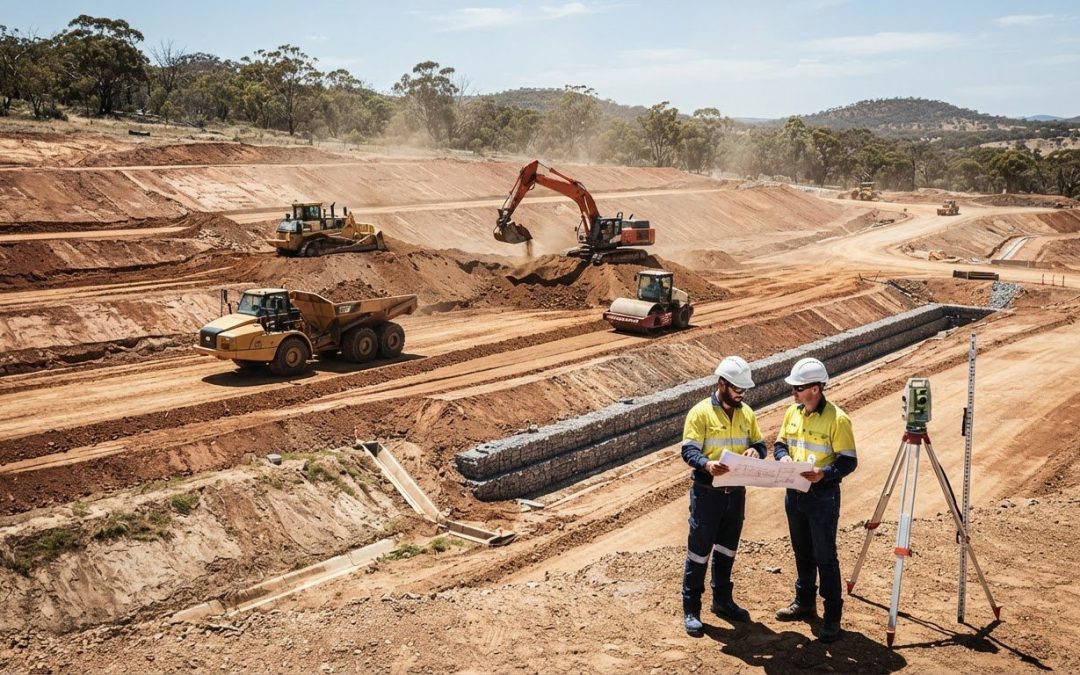
What if the biggest risk in a large earthworks package isn’t the size of the fleet, but the gaps between scope, sequencing and other site activities? Choosing a bulk earthworks contractor means looking beyond equipment lists to understand how the work will fit the wider civil or mining project.
Scale matters, but so do clear work boundaries, ground conditions, material movements and handovers with adjoining packages. When these details aren’t resolved early, they can lead to delays, rework or uncertainty about who is responsible for what. A contractor with broader civil experience can bring useful perspective to those interfaces. McMahons Civil and Contracting has more than 18 years of operating experience across civil, mining and rail infrastructure, including earthworks.
This guide explains how to define bulk earthworks scope, assess project fit using practical delivery criteria and plan sequencing around the rest of the site. It also outlines the information to include in a project brief, so your team can approach the next step with greater clarity.
Key Takeaways
- Define the earthworks package by its outcomes, boundaries and handover points to reduce gaps between work packages.
- Map site conditions and sequencing decisions against the activities that depend on completed ground preparation.
- Assess a bulk earthworks contractor on scope clarity and coordination as well as equipment scale.
- Build a tender brief around project outcomes, constraints, dependencies and interfaces to support clearer planning.
- See how McMahons Civil and Contracting PTY LTD’s earthworks capability sits within more than 18 years of work across civil, mining and rail infrastructure.
What a bulk earthworks contractor delivers on a large project
On a large civil or mining project, ground preparation is more than a series of isolated excavations. A bulk earthworks contractor undertakes a coordinated package of work to shape the site to defined project outcomes, with the extent of that package set by the design, site conditions and contract boundaries. The focus is on how areas of ground are prepared and handed over, not simply on the volume of material moved.
That distinction matters. A broad earthworks package may include large-scale excavation, moving material around the site and placing it where the project requires. Depending on the scope, it may also cover stripping, stockpiling, cut and fill, or shaping work areas. These are possibilities, not a fixed checklist: material suitability, access, design requirements and the responsibilities assigned to other packages all affect what is included. The structural earthworks and bulk site preparation reference provides further context for understanding how scope can be defined.
What does bulk earthworks include?
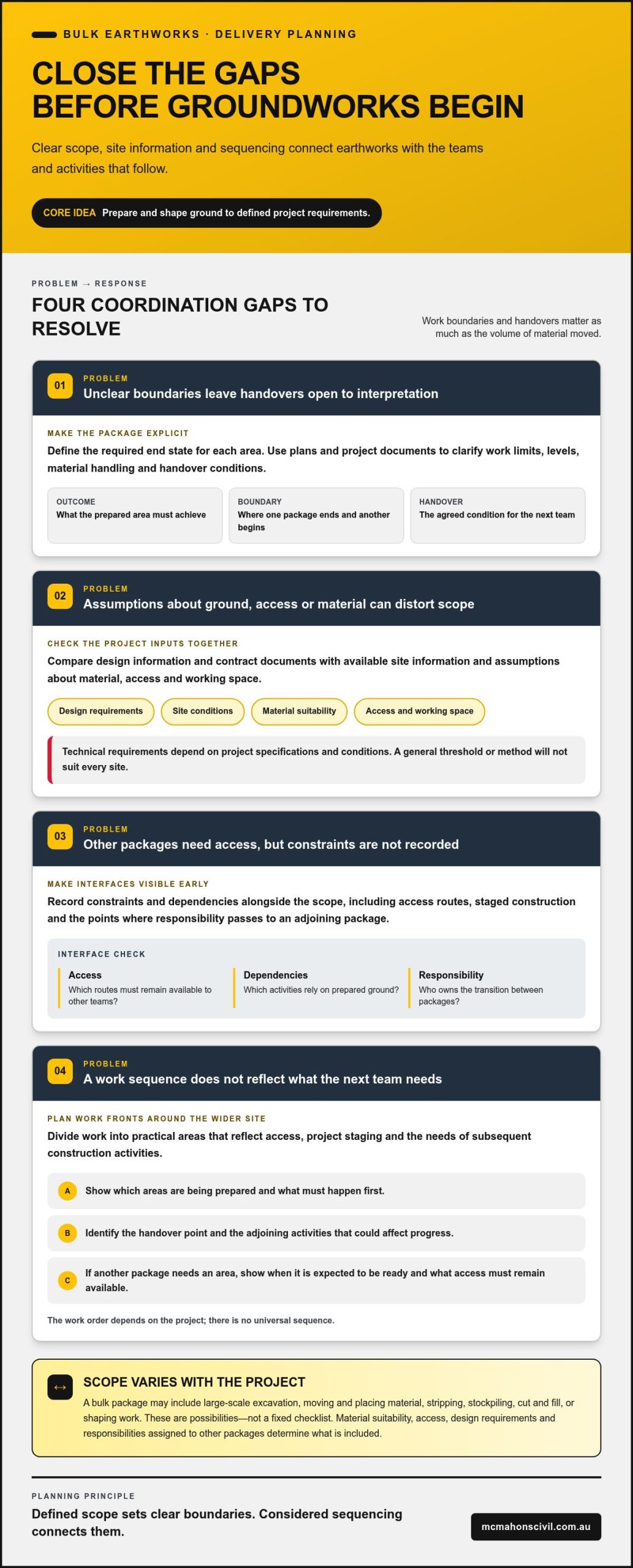
The practical starting point is to identify the required end state for each area, then clarify the work needed to reach it. Plans and project documents can help define limits, levels, material handling and handover conditions. A general overview of the different purposes and methods involved is available in Earthworks (engineering). For a particular project, however, the agreed scope and ground conditions determine the actual tasks.
Some excavation may be part of the bulk package; detailed excavation for a specific structure, footing or service trench may instead sit in a separate work package. Neither arrangement applies universally. The important point is to state where one contractor’s work ends and another’s begins, including who is responsible for the transition between broad site preparation and more localised excavation.
Where bulk earthworks fits in mining and civil projects
Prepared ground supports the activities that follow, whether those involve infrastructure construction, mining-related works or other site packages. If an area is handed over before its boundaries, required condition or access arrangements are clear, adjoining teams may face disruption, duplicated effort or uncertainty about responsibility. Sequencing should therefore reflect both the earthworks plan and the needs of teams working in or around each area.
Bulk earthworks is the coordinated preparation and shaping of ground across a project area to meet defined requirements for the work that follows.
For project teams, this definition makes scope a practical coordination tool. Marking work limits on plans, identifying interfaces and documenting handover expectations helps connect earthworks with the wider construction sequence. McMahons Civil and Contracting PTY LTD undertakes earthworks within civil, mining and rail infrastructure work, where understanding those connections helps keep the ground preparation package in context.
How scope, site conditions and sequencing shape earthworks delivery
Earthworks planning is most effective when decisions follow the information available for the project, rather than a standard sequence applied to every site. The design sets intended outcomes, while ground conditions, access and adjoining activities influence how the work can be organised. A clear review helps a project team turn these inputs into a defined package and identify decisions that could affect later stages.
Which project inputs shape the earthworks scope?
Start with the design information and contract documents, then identify what they establish about work areas, required outcomes and boundaries. Compare those requirements with available site information and the assumptions made about material, access and working space. The appropriate technical requirements depend on the project specifications and conditions, so avoid treating a general threshold or method as suitable for every site.
Next, consider how the earthworks area connects with the rest of the project. Access routes may need to remain available to other teams, while staged construction can limit where work can proceed. Record constraints and dependencies alongside the scope, including areas where responsibility passes to an adjoining package. This gives the bulk earthworks contractor and project team a shared basis for planning, rather than leaving important interfaces to be resolved during execution.
How does sequencing support coordinated delivery?
With the scope and constraints understood, divide the work into practical work fronts that reflect access, project staging and the needs of subsequent construction activities. For instance, if another package needs to enter a particular area, the sequence should show when that area is expected to be ready and what access must be maintained in the meantime. The specific order will depend on the project, not a universal template.
Make coordination points visible before work begins. Show which areas are being prepared, what work must happen first, where handover occurs and which adjoining activities could affect progress. These details support realistic planning conversations across packages and help teams spot clashes before they become site problems. They also give project leads a clearer way to discuss changes when access, staging or site information shifts.
Defined scope gives each team a clear work boundary; considered sequencing connects those boundaries into coordinated project delivery.
- Review: Bring design information, scope documents and site-condition assumptions together.
- Resolve: Identify constraints, material assumptions, access needs and interfaces that influence the work package.
- Sequence: Plan work fronts around staging and the activities that depend on prepared areas.
- Coordinate: Set out handover points and keep affected teams informed as execution progresses.
This sequence helps convert broad project requirements into practical decisions about scope and delivery. McMahons Civil and Contracting PTY LTD works across civil, mining and rail infrastructure, bringing earthworks into a broader contracting context. For an overview of that capability, explore McMahons’ civil and mining contracting capabilities.
Is fleet size enough? Assessing a bulk earthworks contractor’s project fit
A large equipment fleet can indicate capacity, but it can’t show by itself how well a contractor’s approach matches your project. Plant is one part of delivery. The package also needs a clear scope, suitable experience for the project context, defined responsibilities at work interfaces and a workable plan for coordinating activities.
Assess capability against the work to be delivered, rather than in isolation. For example, the requirements for a staged work area with restricted access differ from those for a large, open area, even if both involve substantial earthmoving. A project-specific assessment connects the proposed resources and approach to the actual boundaries, dependencies and handovers.
What matters beyond the equipment list?
Look for a clear connection between the project requirements and how the earthworks package will be managed. Scope clarity helps establish what is included and where responsibility passes to another team. Relevant sector context helps frame the work around the wider civil or mining environment. Coordination then brings the package together with site access, staging and adjoining activities.
Use a simple comparison to identify what your project needs and what a delivery approach should address:
| Project need | Scope clarity | Sequencing | Coordination |
|---|---|---|---|
| Defined work area | Limits and outcomes are understood | Work fronts suit the available space | Handover points are identified |
| Staged access | Responsibilities for access are clear | Work is planned around access needs | Dependencies with other teams are visible |
| Multiple adjoining packages | Package boundaries are documented | Order reflects related activities | Interfaces and changes can be managed |
This comparison isn’t a scorecard for equipment alone. It helps reveal whether the delivery approach addresses the conditions that shape your work. Clear responsibilities are particularly important where one package’s output becomes another team’s starting point. Unclear boundaries can leave tasks uncovered or create duplicated effort.
How should project complexity shape the assessment?
Consider complexity across separate dimensions: the scale of the work, site constraints, staging requirements and dependencies on other activities. A project may be extensive but have straightforward access; another may cover a smaller area yet require careful coordination because several packages rely on the same work fronts. Assessing these factors individually gives a more useful picture than a broad claim about capacity.
Fleet size alone can’t establish project fit; the resources and delivery approach must align with the scope, constraints and coordination demands of the specific package.
For a practical assessment, compare the project brief with the proposed work boundaries, sequence and interface responsibilities, then note any assumptions that need resolution before mobilisation. This keeps the focus on how the work will fit the project, not just what equipment is available.
Preparing a clear bulk earthworks brief for tender and mobilisation
A well-prepared brief gives project teams a shared reference for what the earthworks package must achieve, where it applies and how it connects with other work. It also helps distinguish established project information from assumptions that still need to be resolved during planning. That distinction makes tender responses easier to compare and supports clearer mobilisation discussions.
What information belongs in an earthworks project brief?
Start with the intended outcomes and the design information available at the time of tender. Then describe the work boundaries and site constraints that may influence how the package is planned. Be specific about known interfaces, such as adjoining construction activities or shared access, without adding technical requirements that have not been established for the project.
A practical checklist can help bring the brief together:
- Objectives: State what each work area needs to achieve and how it connects to the wider project.
- Design information: Identify the drawings, documents and revisions being used as the basis for the package.
- Boundaries: Mark the included areas and note where responsibility transfers to another work package.
- Site constraints: Record known access limits, restricted areas and other conditions that could affect work planning.
- Interfaces: Identify adjoining teams, shared work fronts and handover points that need coordination.
- Staging: Note dependencies, required access and any known order in which areas need to be prepared.
- Assumptions: Separate confirmed information from items that need further planning or resolution.
Keep assumptions visible rather than presenting them as settled facts. For example, if a material-handling approach depends on information that is still being developed, record that dependency and its relevance to the scope. This gives the project team a clearer basis for discussing responsibilities and planning decisions without inserting an unverified specification.
How can teams prepare for coordinated mobilisation?
Before work begins, bring the scope, responsibilities and intended sequence into alignment. The project team can use the brief to identify who owns each interface, which areas are needed by adjoining packages and where access or staging decisions may affect progress. A shared view reduces the risk of different teams working from different assumptions.
Mobilisation planning should reflect the project’s actual arrangements. Confirm the relevant documents and communication points, then make sure changes to boundaries, access or sequencing are passed to the teams they affect. The exact method will depend on the project, but the principle is consistent: communicate decisions early enough for connected work packages to plan around them.
A concise brief is useful beyond tender. It can remain a working reference as planning develops, with confirmed inputs kept distinct from open matters and updates shared with relevant stakeholders. For earthworks that sit within broader civil or mining activity, this discipline helps keep the package connected to the project rather than treating it as a standalone task.
To discuss how a clearly defined brief can support your earthworks planning, talk with McMahons about your project scope.
McMahons Civil and Contracting: bulk earthworks within a broader project
Earthworks is often one part of a larger civil or mining programme, with decisions about prepared ground affecting how connected packages can proceed. McMahons Civil and Contracting undertakes earthworks across civil, mining and rail infrastructure, bringing more than 18 years of operating experience to this work. Its broader contracting context can help project teams consider earthworks alongside related scopes and clarify where coordination is needed.
How earthworks connects with wider civil and mining scopes
The relationship between earthworks and other packages depends on the project design and contract boundaries. Prepared ground may form the starting point for later civil construction, while other works may need to be planned around areas being shaped or handed over. The value lies in making those connections clear, not assuming every related activity belongs in the earthworks package.
Where the project calls for it, related services such as rock pitching, gabions or concrete may sit alongside earthworks as distinct or connected scopes. For instance, rock pitching may be relevant to a project area requiring that work, while concrete works may form a separate package with its own requirements and handover. The brief should define the relationship, sequence and responsibilities rather than treating these services as automatic inclusions.
This wider view is useful when teams are identifying dependencies: which areas need to be ready, what adjoining work relies on that preparation, and where responsibilities change hands. McMahons’ work across civil, mining and rail infrastructure provides a broader context for considering those interfaces as part of project planning.
What to expect from a project-specific discussion
A productive discussion starts with the project’s intended outcomes and the information available to describe them. Sharing the proposed scope boundaries, known site constraints, staging considerations and adjoining work packages helps bring the relevant delivery questions into focus. If some details are still being developed, identify them as assumptions or open matters so they can be considered in the project context.
That conversation should centre on the actual package: what the earthworks need to achieve, how the work relates to the wider civil or mining programme, and where coordination will be important. A project-specific approach is more useful than relying on broad capability statements, because it connects the discussion to the project’s requirements without presuming that every site or work package is the same.
McMahons Civil and Contracting is an experienced civil and mining contracting partner, with earthworks capability supported by work across civil, mining and rail infrastructure. If you’re planning a project, outline your objectives, scope boundaries and known constraints as a practical starting point. Discuss your civil or mining project with McMahons.
Put your earthworks scope into motion
Your next step is to turn project requirements into a practical basis for discussion. Bring together the intended outcomes, available design information, work boundaries and known constraints, then identify any assumptions or dependencies that could affect planning. A concise brief gives the project conversation a clear starting point and helps keep attention on how the earthworks package will connect with the wider programme.
Choosing a bulk earthworks contractor is ultimately about aligning the project’s needs with a considered approach to scope and coordination. With that foundation in place, you can discuss the work in terms of its real conditions and interfaces, rather than relying on general capability claims.
McMahons Civil and Contracting brings earthworks capability to civil and mining project contexts. Take the next step and discuss your civil or mining project with McMahons. A clear brief is a sound place to begin.
Frequently Asked Questions
What is the difference between bulk earthworks and detailed excavation?
Bulk earthworks generally shapes or prepares broader areas of a site, while detailed excavation focuses on more localised features, such as a trench or an excavation for a specific structure. For example, preparing a development area may be a broad package, with excavating individual service trenches treated separately. The contract documents determine the actual division, so mark the boundary between these activities to avoid work being missed or duplicated.
Can bulk earthworks be carried out while other construction work is underway?
Yes, work can proceed at the same time in separate areas if access, staging and responsibilities are coordinated. For example, one team might be working in a released zone while earthworks continue elsewhere. The arrangement needs to account for shared access routes, changes to work areas and any activities that depend on completed ground. A sequence showing where teams will work and when areas are handed over helps manage potential clashes.
How long do bulk earthworks projects take?
There’s no reliable standard duration for every project. The programme depends on the defined scope, site conditions, access, material handling and how the work is staged around other activities. A schedule is more useful when it separates the package into work areas or stages, with dependencies and handovers identified. As project information develops, review the sequence against actual constraints rather than relying on a broad duration estimate.
What information is needed to scope a bulk earthworks package?
Provide the intended outcomes, relevant design documents and a clear indication of the areas included. Add available site information, known access restrictions, material assumptions and the planned relationship with adjoining packages. Identify what is confirmed and what remains an assumption. For a bulk earthworks contractor, this context helps frame the package around the project’s actual requirements and makes unresolved scope questions visible before planning advances.
What happens if site conditions differ from the project assumptions?
If observed conditions differ from the information used for planning, document what has changed and compare it with the relevant project assumptions and scope documents. The project team can then consider whether the difference affects the work method, boundaries, sequence or connected packages. Share the issue with the relevant stakeholders and resolve its implications through the project’s agreed processes before treating the original plan as unchanged.
Does a mining project need a specialist bulk earthworks contractor?
Not every mining project has the same earthworks requirements, so the decision depends on the package and its working context. Consider the scope, site constraints, staging and links to other mining or civil activities. Relevant sector experience can help put those interfaces into context, but a project-specific delivery approach still matters. The brief should describe the work clearly enough for capability to be considered against the actual requirements.
How do bulk earthworks connect with drainage and erosion control?
Earthworks shape the site, so the resulting landform and the planned movement of surface water need to be considered alongside drainage and erosion control arrangements. These may sit within separate or related work packages, depending on the project scope. Identify the responsible packages, sequence any dependent activities and make handover points clear. This helps project teams coordinate controls with ground preparation and avoid leaving interface responsibilities unclear.