
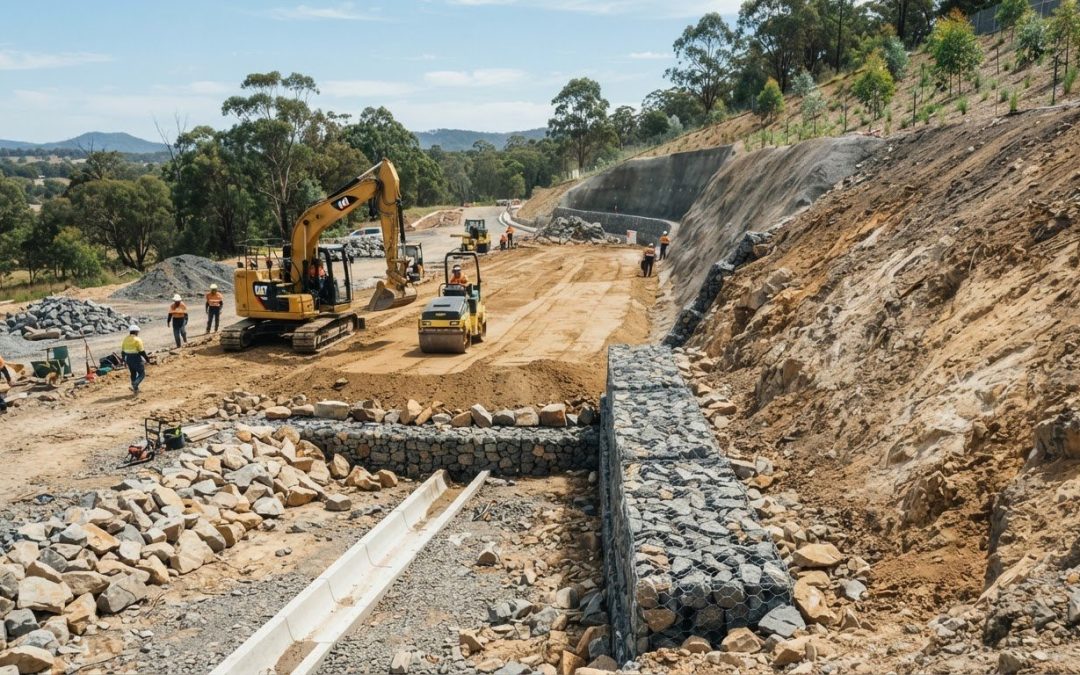
A slope can look stable while water and shifting ground weaken it underneath. Choosing a treatment based on appearance alone may leave the cause unresolved. If you’re researching “slope sabilisation”, the key question is which approach suits the ground conditions, water movement and demands of the project.
Erosion, poor drainage and unstable ground can all contribute to slope movement. Solutions range from surface protection to structural works, and the right approach starts with understanding what is happening on the site. Effective planning identifies the cause of instability, then matches the treatment to the project requirements.
This guide explains common causes of slope instability and compares practical methods, including rock pitching, gabions, reno mattresses and retaining walls. It also covers the role of earthworks and water management, and the site information that helps shape a civil project. McMahons Civil and Contracting PTY LTD provides civil, mining and rail infrastructure services, including these relevant project works.
Key Takeaways
- Distinguish surface erosion from deeper ground movement so the treatment addresses the cause, not just visible damage.
- Understand why effective slope sabilisation considers water flow and ground preparation alongside structural support.
- Compare rock pitching, gabions, reno mattresses, retaining walls and earthworks by their function and site requirements.
- Identify the site details that inform planning, including slope shape, ground conditions, drainage, access and nearby assets.
- See how McMahons Civil and Contracting PTY LTD’s civil construction capabilities can support project delivery matched to site requirements.
What slope stabilisation addresses: movement, erosion and water
Slope stabilisation is the assessment and treatment of ground to reduce instability, manage movement and limit material loss. It may involve reshaping or preparing the ground, managing water, protecting the surface or providing structural support. Erosion control limits soil being washed or blown from the surface. Structural stabilisation addresses movement or failure within the slope itself. The two can be combined, but surface cover alone won’t resolve deeper instability.
A search for “slope sabilisation” may start with bare soil or a small area of slumping, but the visible symptom doesn’t reveal the full problem. Slope angle, soil or rock type, groundwater and surface runoff interact. Steep or weak ground may be more vulnerable, while water can add weight, soften soil or concentrate flow and remove material. The Slope stabilisation methods overview introduces common approaches, but the right treatment depends on the conditions at the particular site.
What can cause a slope to become unstable?
Rainfall can saturate soil or send runoff across the slope, while groundwater may seep through it or collect behind a face. Changes to drains or other flow paths can redirect water and create new areas of erosion. Excavation can remove support at the toe, while placing fill or loading the crest can change the forces acting on the ground. These factors may combine, so assessment needs to consider the site as a whole.
What signs deserve closer assessment?
Look for cracking, slumping, exposed soil, displaced materials and persistent water seepage. These are observable symptoms, not proof of a particular geotechnical cause. A crack, for example, may relate to surface drying, local settlement or broader movement. Its position, pattern and change over time matter. Photographs or one isolated warning sign can’t establish what is happening below the surface.
Closer assessment considers the slope’s shape and materials alongside water movement and changes to the site. Recording where signs appear and whether they change can help build a clearer picture. This distinction matters: surface erosion may call for erosion control, while movement within the slope can require a different response, such as ground preparation, drainage measures or structural support. The treatment should address the assessed cause, not simply cover the visible damage.
How slope stabilisation works: ground, drainage and structural support
A durable approach follows the evidence on site rather than starting with a preferred material or structure. Slope stabilisation depends on how ground conditions, slope geometry and water movement interact, so treatment needs to address the causes of instability as well as its visible effects. The work may involve several stages, adjusted to the site and project requirements.
In broad terms, the work involves understanding the site, managing water, preparing the ground and installing suitable treatment. These steps may overlap, but skipping one can undermine the next. For example, surface protection placed over ground that is still being eroded by concentrated runoff may leave the underlying issue unresolved.
Why drainage and water management matter
Water can affect a slope at the surface and below ground. Runoff following a concentrated path may wash away exposed soil, while water entering the ground can change its condition and contribute to movement. Surface-water measures may direct runoff away from vulnerable areas. Subsurface drainage addresses water moving or collecting within the ground. The measures serve different purposes, and drainage alone won’t resolve every instability problem.
Water management needs to suit the slope and its surroundings. Planning should consider where runoff comes from, how it travels across or through the site, and where it can be directed. Otherwise, controlling water in one area may concentrate flow elsewhere.
How ground preparation and structural support contribute
Ground preparation creates the conditions for the chosen treatment. Depending on the site, earthworks may involve excavation, grading or placing material to form the required profile. Work sequencing needs to account for existing ground, water pathways and how each construction stage affects the slope. Material placement and surface treatment should follow the project’s assessed requirements, rather than a one-size-fits-all sequence.
Where conditions warrant it, retaining elements can provide structural support, while surface measures help limit erosion and material loss. These functions are distinct, although a project may combine them. The role of each measure and its construction requirements depend on project-specific assessment. That’s why slope sabilisation is best approached as coordinated ground, water and structural work, not simply the installation of a barrier or protective layer.
For project delivery that includes earthworks and related civil works, explore McMahons Civil and Contracting PTY LTD’s earthworks capabilities.
Comparing slope stabilisation methods for different site conditions
No single treatment suits every slope. Surface protection can limit erosion, retaining structures can support retained ground, and earthworks can reshape a slope or prepare it for other measures. These approaches may be combined. Selection depends on the ground, water movement, design requirements and site constraints.
| Method | Function and potential context | Installation considerations | Limitations |
|---|---|---|---|
| Rock pitching | Protects an exposed surface against erosion in relevant civil applications. | Ground preparation, rock placement and water movement need to be considered together. | Surface protection alone may not address deeper ground movement. |
| Gabion baskets | Wire-contained rock units can form a permeable retaining or protective structure where the design calls for one. | Layout, foundation conditions, drainage and site access affect construction. | They require suitable ground and a design that accounts for site and hydraulic conditions. |
| Reno mattresses | Lower-profile wire-contained rock units may protect a broader surface, including where water interaction is a design consideration. | Placement and connection with surrounding surfaces and drainage need planning. | They are not a substitute for structural support where deeper instability is present. |
| Retaining walls | Provide structural support to retained ground where project conditions call for a wall. | Ground, water, loading, foundation and construction requirements inform the design and delivery. | A wall does not automatically resolve water movement or instability beyond its designed role. |
| Earthworks | Excavation, grading or material placement can reshape a slope or prepare it for further treatment. | Sequencing, material conditions, runoff and the effect of each stage on the slope need consideration. | Reshaping alone may not control erosion or provide required structural support. |
When rock pitching, gabions or reno mattresses may be considered
Rock pitching is a surface treatment, not a retaining structure. Rock pitching for civil and mining infrastructure can help explain its role in civil settings. Gabion baskets and reno mattresses both contain rock within wire units, but their forms and applications differ. Their suitability depends on design requirements, hydraulic conditions and site constraints. Each option needs to be considered in the context of the project’s intended function.
When earthworks or retaining structures may be relevant
Reshaping or regrading may form part of a broader stabilisation approach, while a retaining wall may be appropriate where ground needs structural support. Each addresses a different part of the site problem and may need to work alongside water management or surface protection. Explore structural earthworks and site preparation and limestone retaining wall applications for further context. Comparing slope sabilisation methods starts with matching each method’s function to assessed site conditions, not ranking them universally.

Planning a slope stabilisation project: assessment, selection and delivery
A sound project plan connects what’s happening on the slope with what the work needs to achieve and how it can be delivered safely. Before selecting a treatment, document the symptoms, assess site conditions, set clear objectives, compare suitable approaches and plan the construction sequence. This helps align the method with the site instead of treating one visible issue in isolation.
- Record observations: note where cracking, erosion, seepage or displacement appears, and record changes over time.
- Understand the site: consider slope geometry, ground information, water flow, access, nearby assets and intended land use.
- Define objectives: clarify whether the work needs to manage surface erosion, support retained ground, reshape the slope or address more than one requirement.
- Compare treatments: assess options against the project objectives and site constraints.
- Plan delivery: coordinate materials, plant access, sequencing, safety and interfaces with existing infrastructure.
What information supports a sound stabilisation decision?
Keep records of observed movement, runoff patterns, previous works and site changes, such as excavation or added fill. Survey information can establish the slope’s shape. Geotechnical and drainage information may help inform the design basis. The information needed depends on the project. A general checklist can organise observations, but it can’t replace assessment specific to the ground, water conditions and proposed work.
How to coordinate design intent with construction delivery
Specifications need to translate into a buildable sequence, with materials, plant access and site constraints considered together. Plan how materials will reach the work area, how each stage interfaces with existing assets and what safety measures construction requires. Documenting constraints and changes during delivery helps keep construction aligned with design intent and supports a methodical response if site conditions differ from expectations.
McMahons Civil and Contracting PTY LTD’s civil, mining and rail infrastructure services include earthworks, rock pitching, gabion baskets, reno mattresses and limestone retaining walls. These capabilities support relevant project delivery, with the scope matched to the work and site requirements.
Approvals and technical requirements vary with the project and jurisdiction, so include current obligations in the planning process. The phrase “slope sabilisation” can describe a broad range of works, but reliable delivery depends on resolving site-specific requirements before construction begins.
Explore McMahons Civil and Contracting PTY LTD’s civil project capabilities when planning earthworks and structural treatments for your project.
Delivering slope stabilisation with McMahons Civil
Putting a stabilisation approach into practice takes more than selecting a material. The construction scope needs to reflect assessed ground and water conditions, the purpose of the treatment and the site constraints. McMahons Civil and Contracting delivers civil, mining and rail infrastructure services nationally, with contracting capabilities relevant to project-specific slope works.
Matching civil capabilities to the stabilisation scope
Rock pitching may suit civil works where the project calls for protection of an exposed slope surface. It isn’t a universal fix. Its role depends on site conditions and whether surface erosion, rather than deeper movement, is the issue being addressed. Gabion baskets and reno mattresses are rock-filled wire systems that can be incorporated where the project requires these types of structural or surface treatments.
Earthworks can form part of the scope where excavation, grading or material placement is needed to prepare or reshape the ground. Limestone retaining walls may be relevant where the project calls for a retaining structure. These methods can also be combined, with water management and ground preparation coordinated to suit design and construction requirements. The appropriate scope depends on the site, rather than an assumption that one method will suit every slope.
McMahons Civil’s civil, mining and rail infrastructure services include rock pitching, earthworks, gabion baskets, reno mattresses and limestone retaining walls. The construction approach and selected capabilities are matched to the project’s site conditions, requirements and intended outcome.
What to prepare before discussing a project
Useful information helps establish the project context and constraints. Consider bringing together:
- Site plans, clear photographs and the project location within Australia.
- Observed issues, such as erosion, cracking, movement or water seepage, and any records of how they have changed.
- Known site constraints, including access, nearby assets, existing infrastructure and requirements for plant or material handling.
- Previous works, relevant reports or other documentation, the intended use of the land and the project’s main objectives.
These details help frame a practical discussion, but they don’t replace project-specific assessment. The term “slope sabilisation” covers different types of work. Clear site information helps connect the project need with a suitable civil construction scope.
To discuss a civil project with McMahons Civil, share your project requirements.
Plan the next step with confidence
Durable slope works start with understanding what’s affecting the ground. Water management, ground preparation and structural support each have a role, and the right combination depends on site conditions and project requirements. Surface protection can help manage erosion, but it isn’t a substitute for structural treatment where deeper movement needs to be addressed.
Good planning brings those decisions together with practical delivery considerations, including access, materials, sequencing and nearby infrastructure. This gives the project a clearer basis for selecting and carrying out appropriate slope sabilisation works.
McMahons Civil and Contracting provides civil, mining and rail infrastructure services, with relevant capabilities including rock pitching, earthworks, gabions and reno mattresses. Discuss your slope stabilisation project with McMahons Civil to take the next step towards a considered project plan.
With clear site information and an approach matched to the project, you can move forward with greater clarity.
Frequently Asked Questions
What is slope stabilisation?
Slope stabilisation involves measures that improve ground performance and manage movement or material loss. It may include controlling surface runoff, preparing or reshaping the ground, protecting exposed surfaces or adding structural support. Erosion control limits soil loss at the surface; structural stabilisation addresses movement within the slope. The right response depends on site conditions, including ground type, slope shape and water movement. “Slope sabilisation” is sometimes used as a search term for this work.
What are the main methods of slope stabilisation?
Common methods include rock pitching, gabion baskets, reno mattresses, retaining walls and earthworks. Rock pitching can protect suitable exposed surfaces, while gabions and reno mattresses use rock held within wire units for different project applications. Retaining walls provide structural support where retained ground is needed. Earthworks can reshape or prepare a slope. These approaches may be used separately or together, depending on the assessed cause of instability and project requirements.
How do you choose the right slope stabilisation method?
Choose a method by matching its function to the assessed site conditions and project objectives. Consider slope geometry, soil or rock, groundwater, runoff, signs of movement, nearby assets, access and intended land use. For example, surface protection may help address erosion but won’t necessarily resolve deeper movement. Assessment information, which may include survey, geotechnical and drainage details, helps compare options and plan a suitable construction approach.
Can drainage alone stabilise a slope?
Drainage can be an important part of stabilisation, but it won’t resolve every cause of slope instability on its own. Surface-water controls can help manage runoff that erodes exposed ground, while subsurface drainage addresses water moving or collecting within the ground. If instability also involves weak material, slope geometry or deeper movement, other measures such as earthworks or structural support may be required. The approach depends on site-specific assessment.
Are gabions suitable for every slope stabilisation project?
No. Gabion baskets can be considered where a project’s design and site conditions suit a rock-filled wire system, but they aren’t appropriate for every slope. Ground conditions, water behaviour, structural requirements, access and surrounding assets can all influence suitability. Reno mattresses are another wire-contained rock treatment, with a different form and role. Assessment helps determine whether either option fits the project, or whether another treatment or combination is more suitable.
What information is needed to plan slope stabilisation works?
Useful information includes site plans, photographs, slope shape, observed cracking or erosion, runoff and seepage patterns, previous works, known ground information and nearby infrastructure. Also record access constraints, intended land use and the project’s objectives. Survey, geotechnical and drainage information may help inform the design and delivery plan. The required detail varies by project, and a general list of observations can’t replace site-specific assessment.