
Mining infrastructure is only as dependable as the ground it stands on. Mining infrastructure support services can include access and haul roads, earthworks and civil works, along with labour, equipment and project support suited to the required work. They can support new infrastructure or upgrades to existing facilities.
Coordinating site works matters: road formation, earthworks and civil construction must fit the project sequence and operating conditions. The scope can differ between a new development and work on an established site.
This guide explains what these services can include across mining, mineral processing, quarry and extractive operations, and how earthworks and civil works contribute to site infrastructure. It also outlines how support needs change through a project, what can affect costs, and what to consider when selecting a provider.
Key Takeaways
- Map site support to the operation’s needs, from mine and processing infrastructure to transport links and non-process facilities.
- Plan haul roads as working assets: construction, maintenance and dust control all affect how reliably they serve site traffic.
- Define earthworks and civil works around the site conditions and whether the project involves new construction or upgrading existing infrastructure.
- Match labour, equipment and project support to the work sequence, then assess providers on capability, track record and value.
- The National Reconstruction Fund Corporation has a total fund of $15 billion, providing wider context for Australian resources investment.
Support across mining, mineral processing, quarry and extractive operations
Support requirements vary by operation, from quarry access to a mine’s processing facilities. The scope may include process infrastructure, non-process assets and services required at different project stages.
Process infrastructure supports extraction and material movement. Crushers, conveyors and processing plants, for example, move ore through a site. Infrastructure engineering can involve civil, structural, mechanical, electrical, instrumentation and control specialists. Their work supports the design and construction of materials-handling and processing systems. Defining interfaces between equipment, structures and site works helps project teams establish a coordinated scope.
Mineral processing and metallurgy shape the facilities required to treat material and recover minerals. For critical minerals processing, Australia’s Critical Minerals Production Tax Incentive provides a 10% refundable tax offset from 1 July 2027 to 30 June 2040. The National Reconstruction Fund Corporation has a total fund of $15 billion. These measures provide investment context, while project design still depends on the material, processing method and infrastructure required.
Australian mining infrastructure projects also need an approvals pathway suited to their location and scope. Environmental permitting involves considerations such as stakeholder engagement, monitoring and reporting. How much do mining infrastructure support services cost in Australia? Costs depend on the work scope, site conditions, materials, equipment and project sequencing, so a clearly defined scope is central to pricing.
Non-process infrastructure
Non-process infrastructure supports people, maintenance and site operations rather than directly extracting or processing minerals. Examples include accommodation, offices, warehouses, workshops, ventilation, explosive storage, and emergency and mine rescue facilities. Identify the facilities the operation needs, where they should sit in relation to work areas, and how they connect to site access and utilities. This clarifies dependencies before construction or upgrades begin.
In-house teams and outsourced providers
How do in-house mining support teams compare with outsourced service providers? In-house teams retain operational knowledge and can coordinate recurring site requirements. Outsourced providers can add specialist capability for defined scopes or changing workloads. The right mix depends on the work, internal capacity, project duration and required skills. Assess each arrangement against capability, track record, cost and value, then set clear interfaces and responsibilities.
Support at each project stage
During planning, define infrastructure needs and coordinate design, procurement and construction management for surface or underground works. Construction brings those plans together through site preparation, facilities and utility connections. Operations may require maintenance or upgrades to existing infrastructure, while closure planning addresses the site’s longer-term needs. Mine-site utilities can include power, renewable energy, water treatment, desalination, pumping, telecommunications, compressed air, and fuel storage and distribution. Match each requirement to its project stage and dependencies.
Haul road construction, maintenance and dust suppression
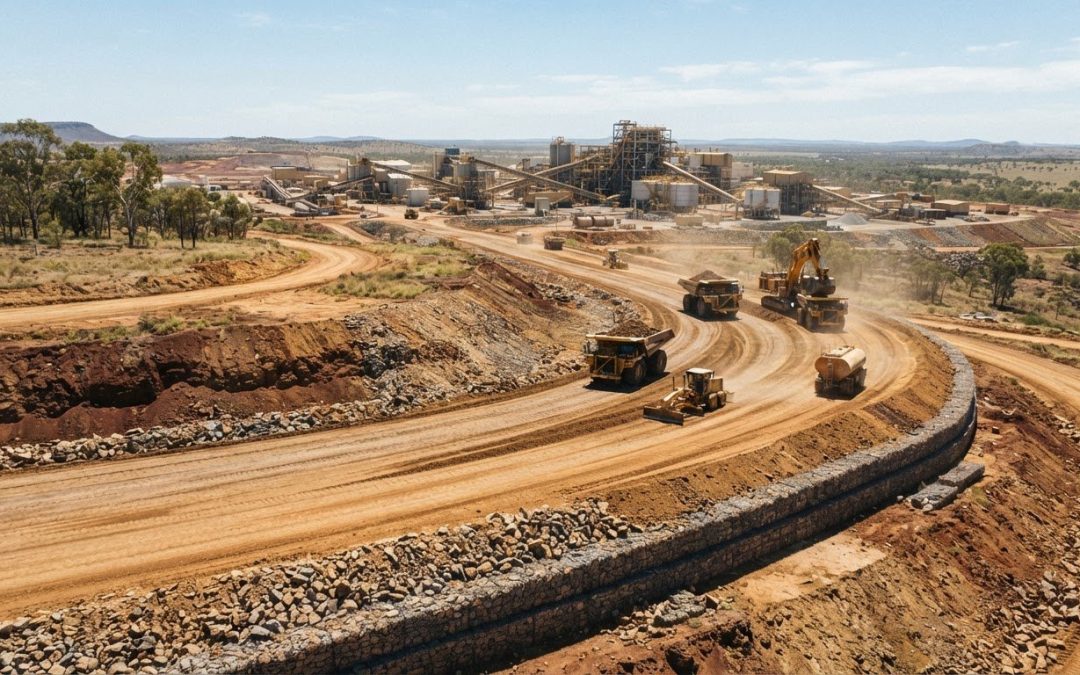
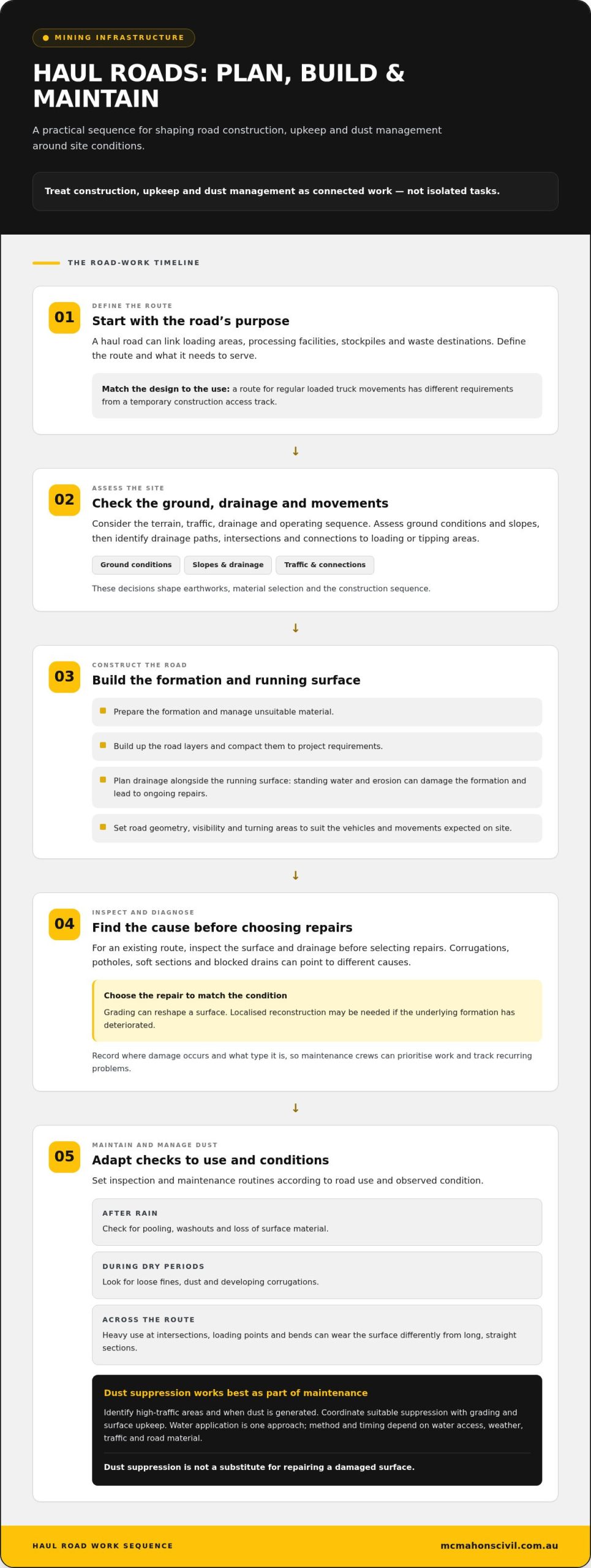
A haul road links loading areas, processing facilities, stockpiles and waste destinations. Its layout and surface must suit the site’s terrain, traffic, drainage and operating sequence. Treat construction, upkeep and dust management as connected work rather than isolated tasks.
Haul road design and construction
Start by defining the route and its purpose. A road for regular loaded truck movements has different requirements from a temporary construction access track. Site teams can then assess ground conditions, slopes, drainage paths, intersections and connections to loading or tipping areas. These decisions shape earthworks, material selection and the construction sequence.
During construction, prepare the formation, manage unsuitable material, build up the road layers and compact them to project requirements. Consider drainage alongside the running surface: standing water and erosion can damage the formation and lead to ongoing repairs. Road geometry, visibility and turning areas must also suit the vehicles and movements expected on site.
For an existing route, inspect the surface and drainage before selecting repairs. Corrugations, potholes, soft sections and blocked drains can indicate different causes. Grading can reshape a surface, while localised reconstruction may be needed if the underlying formation has deteriorated. Record the location and type of damage so maintenance crews can prioritise work and track recurring problems.
Maintenance and dust suppression
Set inspection and maintenance routines according to road use and observed condition. After rain, check for pooling, washouts and loss of surface material. During dry periods, look for loose fines, dust and developing corrugations. Traffic patterns matter too: heavy use at intersections, loading points and bends can wear the surface differently from long, straight sections.
Dust suppression should address the source and site conditions. Identify high-traffic areas, observe when dust is generated, and coordinate suitable suppression with grading and surface upkeep. Water application is one approach, but the method and timing depend on water access, weather, traffic and road material. Suppression works best as part of a maintenance plan, not as a substitute for repairing a damaged surface.
Engineering, procurement and construction management
Engineering, procurement and construction management connect design with materials, contractors and site delivery. Define the road scope, specifications, interfaces, supply requirements and construction sequence before work begins. Project controls can then track progress, manage changes and coordinate access around operating areas. Clear responsibilities help align design decisions with what crews can build on site.
Construction support during commissioning
As a new road or upgraded route enters use, construction support can help resolve outstanding work and coordinate handover. Walk the route with site representatives, record defects, confirm drainage paths remain open, and document maintenance needs. For related site works, concrete works for mining sites may also form part of the project scope.
Earthworks and mine civil works
Mine earthworks shape the ground for facilities, access and operational areas. The scope can include clearing, cut and fill, ground preparation, embankments and foundation excavations. Mine infrastructure solutions may upgrade existing facilities or create new infrastructure. Defining which applies helps establish the work sequence, site interfaces and materials required.
Begin with a site assessment that identifies terrain, existing assets, drainage paths and planned work areas. Compare the proposed design with ground conditions before setting excavation and fill limits. For example, a processing plant platform needs coordinated formation and foundation areas, while a stockpile area needs room for material placement and site access. Mapping these requirements helps avoid clashes between earthworks and later construction.
Plan bulk earthworks in sequence: prepare the work area, excavate or cut high ground, move suitable material to fill zones, then shape and compact the formation to the design. Separate material according to its intended use and manage unsuitable material as a distinct part of the scope. This helps balance excavation, fill and haulage across the site.
Civil works turn prepared ground into usable infrastructure. Examples include concrete foundations, drainage structures, retaining walls, culverts and hardstands around workshops or processing facilities. Coordinate dimensions, levels and service interfaces before placing concrete or building adjoining structures. A mismatch between foundation positions and equipment requirements can lead to rework, so construction drawings and site set-out must align.
Plan water management during earthworks, not just after construction. Identify where runoff travels, where it could collect, and how drains connect to the finished site. Shape batters and embankments to the design, and protect exposed ground where erosion could affect nearby work areas. Environmental permitting also involves stakeholder engagement, monitoring and reporting considerations. Include these activities in project plans and site records.
Upgrading an operating facility requires a different sequence from building on undeveloped land. Existing roads, services and structures can constrain access, excavation and material movement. Divide the work into practical zones, identify interfaces with ongoing operations, and schedule activities around access requirements. This clarifies the scope for crews and helps project managers coordinate civil construction with other site work.
Before handover, inspect finished levels, drainage paths, concrete elements and retaining structures against the project documents. Record outstanding work and provide the site team with relevant as-built information and maintenance requirements. A structured close-out links construction decisions to future operations, particularly where new civil works join older facilities or infrastructure.
Labour, equipment and project support
Labour, equipment and project coordination must match the scope and sequence of site works. A civil construction package, for example, may require different skills and machinery from an upgrade to an operating workshop. Define the tasks first, then map each activity to the personnel, equipment and decisions needed to deliver it.
Build a resource plan around the work breakdown, site access and interfaces with mining operations. Identify which tasks need specialist operators, supervisors, technical input or construction crews. Then link equipment requirements to each activity, such as excavation, material placement, concrete works or lifting. This makes overlaps visible and helps teams plan access, supply and work fronts.
Project support connects people and resources to the delivery plan. It can include design coordination, procurement planning and construction management for surface or underground infrastructure. A practical sequence is to define the scope, identify dependencies, align procurement with the construction programme, then track changes and progress. Clear responsibilities help the project team resolve interfaces before they disrupt site activities.
For each work package, document:
- The required labour skills and the tasks each role covers.
- The equipment needed, where it will work and when it is required.
- Materials and supply dependencies, including delivery points and site access.
- Interfaces with existing facilities, operating areas and other contractors.
- Progress measures, reporting responsibilities and change processes.
Use the plan to check whether resources remain suitable as the scope changes. If an earthworks package expands, for example, review equipment allocation, material movement and crew sequencing together. A tailored plan considers the site layout and project stage rather than treating labour and equipment as separate lists.
Assess providers using evidence relevant to the work. Check that a mining support service provider meets applicable regulations and holds the necessary certifications. Evaluate capability and track record, then consider cost and value. Compare the proposed scope, delivery approach, relevant experience and plans for coordinating with the project team.
Costs depend on the work scope, site conditions, labour requirements, equipment needs, materials and sequencing. Set out these factors clearly in a quote request so proposed work can be assessed against the project’s actual requirements. Consider value alongside cost, including how well the scope addresses interfaces and avoids duplicated effort.
During construction and commissioning, project support can coordinate outstanding work, document changes and organise handover information. For example, a concrete package may need its finished work recorded alongside related site interfaces. A defined close-out process gives the operations team a clear record of the completed scope and any ongoing maintenance requirements.
What infrastructure support services do Australian mining projects need at each stage?
Support needs change as a mining project moves from planning into construction, operation and closure. A staged plan connects infrastructure design, procurement, site works and operational requirements. It also makes dependencies visible, such as the links between access, utilities and processing facilities.
Planning and design
At the planning stage, define the infrastructure needed for the proposed mine, processing plant and supporting facilities. Site access, accommodation, workshops and materials handling each create different design requirements. Mine infrastructure services can include design, procurement and construction management for surface and underground infrastructure. Identify interfaces early, including where roads meet work areas and where services connect to buildings or plant.
Consider utilities alongside civil and process requirements. A project may need power generation and distribution, renewable energy, water treatment, desalination, pumping, telecommunications, compressed air, and fuel storage and distribution. Map each need to its location, purpose and connection points. This gives designers and project teams a coordinated basis for planning supply and construction.
Procurement and construction
Once the scope is developed, procurement translates design requirements into materials, equipment and construction packages. Coordinate delivery dates with site readiness, access routes and the work sequence. For example, a concrete foundation must align with the equipment layout and construction programme. Project management then tracks interfaces, changes and progress across civil, structural and services packages.
During construction, site support may cover earthworks, access, drainage, facilities and utility installation. Sequence activities so completed areas remain accessible to the next crews. Keep project records aligned with current drawings and work packages. This helps teams communicate what has been built, identify outstanding tasks and manage changes while keeping connected work in view.
Commissioning and operation
Commissioning brings infrastructure and operating systems together. Confirm that access, utilities and supporting facilities are ready for the planned operating sequence. In a processing area, for example, coordinate civil works and service connections with equipment and plant interfaces. Record defects and outstanding work so the operations team has a clear handover.
Once a project is operating, it may need maintenance, repairs or upgrades to existing infrastructure. Review asset condition, operational demands and planned changes before defining each work package. A workshop expansion, for example, may affect access, drainage and utility connections as well as the building footprint. Coordinate those interfaces before site work begins.
Closure planning
Closure planning should account for infrastructure that will be retained, repurposed or removed. Identify affected roads, buildings, services and disturbed areas, then include the required work in the closure sequence. Environmental monitoring and reporting can inform site planning and records. Bring closure requirements into project decisions early so later work reflects the intended long-term site condition.
For site works across these project stages, discuss your mining infrastructure requirements as part of planning the scope and its civil interfaces.
McMahons Civil and Contracting: Rock Pitching
McMahons Civil and Contracting PTY LTD provides mining site works including rock pitching, earth works, gabion baskets and reno mattress, and concrete. These services can support ground preparation, rock placement, and retaining or erosion-control works within broader civil construction.
Turn to McMahons Civil and Contracting PTY LTD when your project needs these physical site works as part of a defined mining or civil package. Information about work areas, site conditions and required interfaces helps establish how the work fits the project sequence.
For infrastructure work focused on process equipment, electrical systems or specialist plant design, distinguish those requirements from civil site works when coordinating project packages.
Contact McMahons Civil and Contracting PTY LTD to discuss your site works.
Set the next work package up for delivery
Turn the current site need into a clearly defined scope before planning the next phase. Specify the work area, ground interfaces, adjacent assets, construction sequence and handover information. This gives the project team a practical basis for coordinating the package with other site activities.
For civil site works, McMahons Civil and Contracting PTY LTD offers Rock Pitching, Earth Works, and Gabion Baskets & Reno Mattress. These services can suit scopes involving ground preparation, rock placement or retaining and erosion-control works. A clear description of site conditions and the intended outcome helps shape the work package.
Good coordination also means identifying where civil construction interfaces with processing equipment, utilities or other specialist work. Set out responsibilities and handover points so each package fits the broader programme. This makes mining infrastructure support services easier to organise around the next work priorities.
Contact McMahons Civil and Contracting PTY LTD to discuss your site works. A well-defined scope is a sound starting point for moving the project forward.
Frequently Asked Questions
What services are included in mining infrastructure support in Australia?
Mining infrastructure support can cover site access, earthworks, civil construction, facilities, utilities and project coordination. The exact package depends on whether the work supports extraction, mineral processing, a quarry or an existing operation. For example, a processing upgrade may require construction interfaces to be managed alongside operating plant, while a new site facility may need foundations and access works. Define the operational purpose first, then group related work into coordinated packages.
What are the steps to procure and contract mining infrastructure support services?
Start by defining the work area, deliverables, site interfaces and required handover information. Next, prepare a scope that identifies design inputs, materials, access constraints and dependencies on other packages. Assess providers against relevant capability, track record, regulatory requirements and value. Then agree on responsibilities, communication channels, change management and progress reporting in the contract. Before mobilisation, align the construction sequence with site access and operational activities.
What power, water, roads, camps and communications infrastructure do mine sites require?
Requirements depend on the site’s operating model and location. A remote operation may need power generation and distribution, water treatment or pumping, telecommunications, fuel systems, access roads and accommodation. A site near established services may connect differently, but still needs planned capacity and clear interfaces. Assess each service by its users, location, operating demands and connection points. For example, map how communications reach work areas and how water supply supports facilities and operational tasks.
What safety, environmental and operational risks affect mining infrastructure support services?
Risks can arise where construction interfaces with operating areas, moving equipment, excavations, traffic routes or existing services. Environmental considerations include runoff, erosion, dust and disturbance around work areas. Operational impacts may include blocked access, interrupted utilities or conflicts with processing activities. Identify hazards and environmental controls during scope planning, then assign responsibilities, work boundaries and communication procedures. Site monitoring and reporting help teams record conditions, respond to changes and coordinate corrective work.
How do remote location, workforce availability and Indigenous engagement affect mining support in Australia?
Remote locations can affect mobilisation, material deliveries, accommodation and access to specialist personnel. Workforce availability influences work sequencing and which skills need to be planned for each package. Early engagement with Traditional Owners and relevant Indigenous groups can help project teams understand local perspectives, cultural considerations and opportunities for participation. Include engagement in project planning alongside stakeholder communication, so site footprints, schedules and workforce arrangements can be considered before construction begins.