
The longest capability statement doesn’t necessarily identify the right project partner. Searching for civil and mining contractors can cover businesses with very different scopes, from broad civil works to specialist support. A list of services alone won’t show how well a contractor fits your project.
Before making a decision, it’s reasonable to want clear evidence of capability, coordination, safety, quality and environmental responsibilities. This guide explains common civil and mining contractor scopes and what to ask during early evaluation, including how to compare stated experience with the work, interfaces and requirements your project involves.
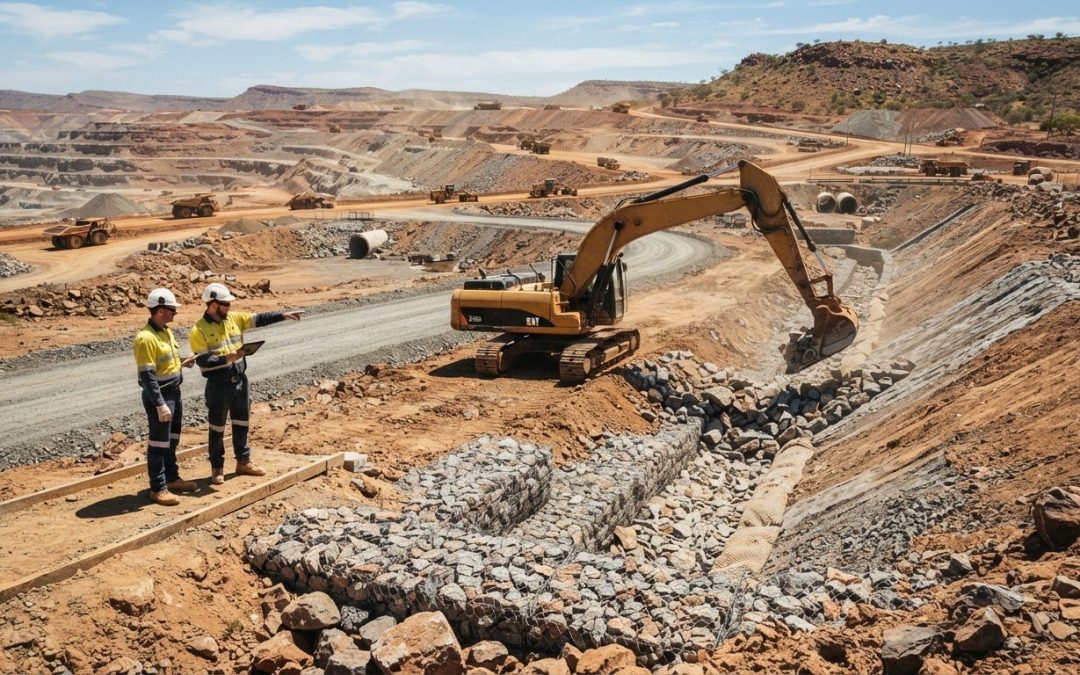
McMahons Civil and Contracting PTY LTD provides an example of a contractor with stated capabilities across civil, mining and rail, including rock pitching, earthworks, concrete, rock breaking, gabion baskets and reno mattresses, paving and landscaping. These services won’t suit every project, but understanding how they relate to your scope can help you assess potential fit. The focus is on matching verifiable capability to project interfaces, not simply counting services.
Key Takeaways
- Define the work package and contract boundaries first, so it’s clear what the contractor is responsible for delivering.
- Map how work packages connect, including where earthworks, stabilisation, structures, concrete and access works may depend on one another.
- When assessing civil and mining contractors Western Australia, request relevant project evidence and compare it with your scope, coordination needs and site constraints.
- Before engagement, document design status, deliverables, programme assumptions, reporting needs and interfaces with other contractors.
- Assess McMahons Civil and Contracting’s stated services, including rock pitching, earthworks, gabions, reno mattresses, concrete and paving, against your project brief.
What do civil and mining contractors do across a project?
What work does a civil and mining contractor actually take responsibility for? The answer should come from the project brief and contract, not the contractor’s title or service list. For buyers comparing civil and mining contractors Western Australia, establish which work packages the contractor will deliver, where its responsibility begins and ends, and how those tasks connect with the rest of the project.
A contractor delivers an agreed scope. Depending on the contract, that may include physical works, coordination with other parties, or both. Civil works can involve infrastructure and site development; mining support is shaped by mine-site requirements; and rail infrastructure work has its own project-specific interfaces. A contractor may work across one or more of these areas, but don’t assume every provider has experience or capacity for all three.
Civil engineering is a broad discipline concerned with infrastructure such as roads, bridges and pipelines. For a buyer, the practical question is narrower: which parts of the planned work is this contractor engaged to complete, and what must be provided by the client, designer or other contractors?
Which services commonly sit within a civil and mining contract?
Depending on the brief, common civil scope categories can include earthworks, site preparation, drainage and access works. Specialist packages may include rock pitching, gabion baskets, concrete works or retaining walls. These activities can be linked: ground preparation may affect the sequence of later construction, while access arrangements can influence how people, materials and equipment reach a work area.
Mining and rail scopes may add distinct site, operational or coordination requirements. Confirm these against the project documentation rather than assuming a contractor’s general civil experience covers them. McMahons Civil and Contracting lists earthworks, rock pitching, gabion baskets and reno mattresses, concrete, limestone retaining walls, paving, landscaping, rock breaking, mining and rail among its capabilities. Assess each against the specific scope.
When is a specialist contractor needed instead?
A specialist contractor may suit a clearly defined package that calls for particular materials or methods, such as rock pitching or gabion installation. That doesn’t automatically mean it should be a separate contract. The right arrangement depends on the design, procurement strategy and who is responsible for connected work.
Before appointing a specialist, confirm who provides design information, manages approvals and coordinates interfaces with adjacent packages. Clarify access, sequencing, acceptance criteria and handover records too. Clear boundaries help prevent gaps, such as one contractor expecting another to complete a connecting task, and make it easier to decide whether one delivery partner or separate specialists better suit the project.
How do civil and mining contractor capabilities fit together?
A contractor’s capability is more than a list of services. It’s how its work packages connect with the project design, site conditions and other contractors’ responsibilities. Earthworks may establish the formation for later construction, while drainage, stabilisation, structures, concrete and access works each need to align with that groundwork. A gap at an interface can leave the client managing unclear responsibilities or unfinished connections.
For buyers assessing civil and mining contractors Western Australia, consider each service in relation to the work before and after it. The table below provides prompts for comparing a contractor’s stated capability with evidence relevant to your project. These are evaluation examples, not claims that every contractor or package suits every job.
| Project requirement | Evidence to request |
|---|---|
| Earthworks and site preparation | Examples of comparable scope, stated deliverables and how levels, formation and access were addressed. |
| Drainage and ground stabilisation | Relevant work examples and an explanation of how the package interfaces with earthworks and adjacent construction. |
| Structures and concrete | Evidence relevant to the specified design, scope boundaries and coordination requirements. |
| Access and paving | Examples that match the intended use, site constraints and connections to surrounding work. |
| Specialist civil works | Relevant examples of the specified method or material, plus clarity on design, approvals and handover responsibilities. |
How do earthworks and site preparation support later construction?
Bulk earthworks can establish the levels, formation and workable access needed for following activities. The sequence shouldn’t be considered in isolation, though: drainage requirements and known ground conditions can affect how the prepared area supports later work. Ask how the proposed earthworks scope relates to design information, and what assumptions or exclusions apply. This helps you assess structural earthworks and bulk site preparation against the project’s actual requirements.
Where do specialist civil works add project value?
Rock pitching, gabion baskets and reno mattresses may form part of specified works where the design calls for them. Concrete, retaining walls and paving are separate scopes, each with its own requirements and interfaces. Check that the contractor’s evidence relates to the work being procured, rather than relying on a broad service label. McMahons Civil and Contracting lists these capabilities among its services. Review its civil contracting services against your project brief.
How can you compare civil and mining contractors fairly?
A fair comparison starts with giving each contractor the same project brief. The longest service list isn’t necessarily the best fit. What matters is whether the proposed team can deliver your defined package, coordinate its interfaces and meet the project’s requirements. When comparing civil and mining contractors Western Australia, assess evidence against your scope rather than treating broad capability statements as proof of suitability.
| Assessment area | What to compare | Questions to ask |
|---|---|---|
| Scope alignment | How closely stated services match the work package and site conditions. | Which deliverables, exclusions and assumptions apply? |
| Relevant experience | Examples involving similar work, conditions or interfaces. | What was the contractor responsible for, and what outcomes can be shared? |
| Capacity | Proposed personnel, equipment and systems for the work. | Who will be assigned, and how will availability be confirmed? |
| Coordination | Approach to sequencing, dependencies and other contractors. | Who manages interfaces, handovers and changes? |
| Communication | Reporting arrangements and clarity of responses. | Who is the project contact, and how will progress and issues be raised? |
What evidence should a capability statement demonstrate?
Look beyond service headings. Ask for examples relevant to the proposed package and site conditions, with the contractor’s role, scope boundaries and outcomes explained where disclosure is permitted. A project name alone may not show whether the contractor delivered comparable work or supported another party’s package.
Check claims about personnel, equipment, systems and accreditations directly. Request relevant details and confirm they apply to the proposed work. Don’t infer them from polished marketing material.
How should safety, quality and environmental performance be assessed?
Ask how the contractor would identify and manage risks specific to your site and scope, and what information it needs from you to do so. Discuss how inspections, quality records and non-conformance issues are recorded, communicated and resolved.
For environmental management, clarify which site controls and reporting requirements apply under the project documents, who is responsible for them and how performance will be documented. The relevant evidence depends on the contract and project; don’t assume a particular certification is mandatory. A clear, specific response is more useful than a general assurance.

What should you confirm before engaging a civil and mining contractor?
Before approaching civil and mining contractors Western Australia, prepare a brief that makes the work and its boundaries clear. A well-defined request helps contractors respond to the same requirements and makes differences in scope, assumptions and proposed delivery easier to assess.
What information should a project brief include?
Set out the available designs and specifications, expected deliverables and what falls outside the package. Record known site conditions, access limits, other work occurring nearby and sequencing dependencies. State programme assumptions and reporting needs, and identify information that is not yet confirmed. Being clear about gaps gives contractors a chance to explain what they need clarified before proposing an approach.
What questions should you ask during early discussions?
Ask for examples of comparable work and clarify the contractor’s exact role in each example. Discuss who will coordinate design information, approvals, site access, subcontractors and handover. Ask how risks, variations, progress updates and emerging issues will be communicated, and who is responsible for responding.
Use this sequence to move from an initial scope to a clearer basis for engagement:
- Define the work package. List the activities, locations, intended deliverables and explicit exclusions.
- Assemble project information. Share available designs, specifications and known site constraints, and mark what remains uncertain.
- Map interfaces. Identify adjacent packages, access dependencies, sequencing and the party responsible for each connection or handover.
- Set delivery expectations. Record programme assumptions, progress reporting needs and how questions or changes should be raised.
- Review responsibilities and contract terms. Check proposed inclusions, exclusions, subcontractor interfaces and change-control arrangements against the brief.
Pay close attention to boundaries. If one party prepares a work area and another builds on it, agree what completion and acceptance mean before work starts. Clarify whether design information, approvals or site access are client-provided, contractor-managed or shared responsibilities. Record assumptions rather than relying on informal discussions.
Procurement decisions can involve technical and contractual matters beyond a general capability review. Seek advice from suitably qualified engineering, legal or regulatory advisers where the project requires it. The aim isn’t to remove every uncertainty at the outset, but to agree how unknowns will be identified, assessed and managed.
Once the brief is documented, you can discuss your project requirements with McMahons Civil and Contracting and assess its stated capabilities against the defined scope.
How can McMahons Civil and Contracting support a defined project scope?
Once you’ve established the work package, interfaces and evidence you need, assess a contractor against those requirements. McMahons Civil and Contracting lists capabilities across civil, mining and rail, alongside specialist services including rock pitching, earthworks, gabion baskets and reno mattresses, concrete works, limestone retaining walls, Geolink paving and brick paving. These are potential areas of alignment to investigate, not a guarantee that every service or project is a suitable fit.
Which McMahons capabilities may align with your scope?
Start with the specified work. If a civil package includes rock pitching or gabion baskets and reno mattresses, ask how McMahons’ listed capability relates to the design, site conditions and required interfaces. For earthworks, concrete, retaining walls or paving, compare the stated service with the defined deliverables, construction sequence and handover requirements.
Each package has its own boundaries. A paving scope, for example, may connect with work completed by another contractor, while earthworks may depend on design information or site access being available. Confirm what McMahons would be responsible for, what must be provided by others and how interfaces would be managed. Its stated civil, mining and rail capabilities may also be relevant to some project briefs, but discuss the specific requirements rather than assuming a fit.
What is a useful next step for a prospective client?
Prepare a concise project brief before making contact. Include the scope and intended deliverables, location constraints, programme expectations, available drawings or specifications, known site conditions and open questions. Note adjacent work packages and identify responsibilities or assumptions that still need confirmation.
In early discussions, ask McMahons to confirm whether its stated capabilities align with your requirements, what information is needed to assess the work, and how responsibilities, interfaces and project-specific requirements would be clarified. This keeps the conversation grounded in the actual brief and helps identify where further information or specialist advice may be needed.
For buyers comparing civil and mining contractors Western Australia, the aim isn’t to find the contractor with the longest list of services. It’s to establish a clear match between the documented scope and relevant capability, then confirm the delivery arrangements. If your requirements align with McMahons’ stated services, Discuss your project requirements with the team.
Set your project up for a clear contractor fit
Choosing among civil and mining contractors Western Australia starts with defining the work, not counting services on a capability statement. A clear brief, relevant evidence and agreed responsibilities help you assess whether a contractor’s experience and stated scope align with your project conditions and interfaces.
Compare what each contractor can demonstrate against the actual package, including how safety, quality, environmental requirements and coordination will be addressed. Clarify deliverables, exclusions and handovers before engagement so expectations are understood from the outset.
McMahons Civil and Contracting lists civil, mining and rail among its capabilities, with stated services including rock pitching, earthworks, gabion baskets and reno mattresses. Whether these align with your project depends on the defined scope and confirmed delivery arrangements. A focused discussion can help establish what information is needed to assess that fit.
Discuss your project requirements with McMahons Civil and Contracting. With a well-prepared brief, you can take the next step with greater clarity and confidence.
Frequently Asked Questions
What does a civil and mining contractor do?
A civil and mining contractor delivers the work packages agreed in the project brief and contract. Depending on the project, this may include earthworks, rock pitching, concrete, gabion baskets, retaining walls or paving. Mining and rail work can involve distinct site requirements and interfaces, so a contractor’s title alone doesn’t define its responsibilities. Confirm the specific deliverables, exclusions, coordination duties and handover requirements before engagement.
How do I choose a civil and mining contractor for a project?
Choose by matching evidence-backed capability to your defined scope, not by counting services. Give each candidate the same brief, then compare relevant project examples, the contractor’s role, proposed personnel and equipment, coordination approach and communication arrangements. Ask how safety, quality and environmental requirements will be addressed for your project. For civil and mining contractors Western Australia, suitability still depends on the particular site conditions, work package and confirmed delivery arrangements.
What should a civil contractor capability statement include?
A useful capability statement should clearly describe services, relevant project experience and the contractor’s responsibilities on comparable work. It can also identify proposed personnel, equipment, systems and accreditations where these are relevant and verifiable. Treat the statement as a starting point, not proof that every listed service suits your job. Ask for examples connected to the proposed package and confirm claims directly, including scope boundaries and exclusions.
Can one contractor manage both earthworks and specialist civil works?
Yes, a contractor may be able to deliver both, provided its capability and confirmed arrangements suit the project. For example, earthworks may sit alongside specified rock pitching, gabion, concrete or paving packages. Check how the work will be sequenced, who provides design information, and who manages connections between packages. A single contractor can simplify some interfaces, but it isn’t automatically the right arrangement for every project.
What evidence should I request from a mining contractor?
Request examples of comparable work and clarify the contractor’s exact role, scope and outcomes where disclosure is permitted. Ask what personnel, equipment and systems are proposed for your package, and verify any credentials or accreditations relevant to the work rather than assuming them. Discuss project-specific coordination, safety, quality and environmental processes too. The evidence you need will depend on the site, contract requirements and work being procured.
How do civil contractors manage safety and environmental risks?
Ask the contractor to explain how it identifies and manages risks relevant to the site and work package. Discuss how controls are communicated, who monitors them and how issues are reported. For quality, clarify inspection records and the process for addressing non-conforming work. For environmental matters, confirm the controls and reporting required by the project documents, and who is responsible for each. Requirements vary, so assess the proposed approach against your contract and seek qualified advice where needed.
What information should I provide before requesting a project discussion?
Provide a concise scope, location constraints, programme expectations and available drawings or specifications. Include known site conditions, access limits, deliverables, exclusions and interfaces with other work. Identify what remains undecided, along with your reporting needs and key questions. This gives McMahons Civil and Contracting a clearer basis to discuss whether its stated capabilities, including civil, mining and rail services, may align with the brief and what further information is needed.