
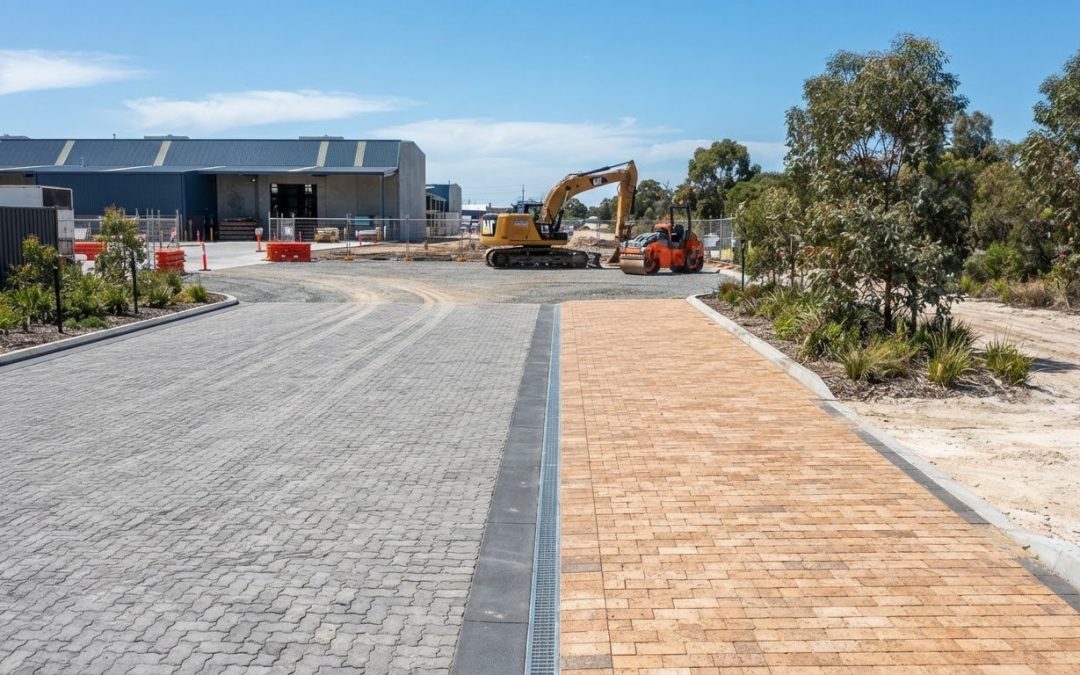
The most suitable commercial surface isn’t always the one that looks best on a plan. Choosing commercial paving solutions means matching the surface to how the site will be used, its ground conditions and the civil works around it.
When vehicle movements, pedestrian access, drainage and construction sequencing all matter, it helps to assess Geolink Paving and Brick Paving against the same project requirements. Paving is not an isolated finish. It needs to be planned alongside earthworks and other civil work so the scope, access and interfaces are clear.
This guide sets out practical questions to help define your paving requirements, compare the available options and plan related work. Start with the area’s intended use, then consider access, site conditions, safety, budget priorities and how the paving connects with other work. A clear brief gives the project team a useful basis for making decisions and coordinating delivery.
Key Takeaways
- Define what the paved area needs to do before comparing surface options.
- Separate essential project requirements from design preferences and assess each option against the same criteria.
- Compare Geolink Paving and Brick Paving in the context of the intended use and site, rather than assuming they serve the same purpose.
- Plan scope, interfaces, access and communication together, with staging shaped around site operations.
- McMahons Civil and Contracting provides paving alongside Earth Works, Concrete and Landscaping for projects that include related civil work.
Commercial paving solutions: define the project need before choosing a surface
Commercial paving solutions are planned around a site’s purpose and constraints. The right approach depends on what the area needs to support, who will use it, how people and vehicles will move through it, and how it connects with the wider project. Define these requirements before focusing on the surface’s appearance.
A loading area, pedestrian route and shared access zone may have different functions, even on the same site. List the main activities for each area and note how it connects to entrances, work zones and adjoining spaces. This gives the project team a clearer basis for defining the paving scope and comparing options. For background on the range of types of pavement surfaces, it helps to consider paving as a broad category rather than a single, universal solution.
What should a commercial paving project achieve?
Describe the area’s main function in practical terms. Identify who needs to move across it, the routes they will use and how the paved area connects to entrances, work zones or neighbouring spaces. Then separate essential outcomes, such as providing a usable access route, from preferences such as a particular appearance or layout.
This distinction helps stakeholders make decisions against a shared scope. It also makes trade-offs easier to discuss when a preference needs to be balanced with site constraints or budget priorities.
- Purpose: State what the paved area needs to support.
- Users and movement: Map the people, vehicles and routes the site needs to accommodate.
- Priorities: Record essential outcomes separately from preferred finishes or arrangements.
Where does paving sit within a civil project?
Paving is one part of a wider civil scope. Earth Works may form part of the project around the paved area, while Concrete or Landscaping may connect with its edges and adjoining spaces. Consider these work packages together so their boundaries and responsibilities are clear.
Adjacent activities can affect what needs to be included, when work can proceed and how teams coordinate access. If earthworks and paving are both in scope, for example, include their sequence in delivery planning. If landscaping meets the paved area, define the interface between the two. The right approach depends on the site and agreed scope.
Define the paving boundary, identify adjoining work and agree how responsibilities fit together. This helps the team plan the surface as part of the whole project, rather than as a finish selected in isolation.
Geolink Paving and Brick Paving: understand the confirmed options
McMahons Civil and Contracting provides Geolink Paving and Brick Paving. To compare them, start with the job the surface needs to perform, then consider the site context and project brief. Establishing requirements first helps keep the discussion focused on fit, rather than assumptions based on an option’s name.
Use the comparison below to structure the project discussion. It is not a specification or a claim that one approach is better. Instead, it identifies questions to assess consistently against your project requirements.
| Option | Project purpose | Site context | Questions for the design team |
|---|---|---|---|
| Geolink Paving | Assess it against the function defined in the project brief. | Describe where it sits within the site and how it connects to adjoining areas and work packages. | What must this area support? How does it relate to access, surrounding works and essential requirements? |
| Brick Paving | Assess it against the same intended function and agreed project outcomes. | Consider the area’s role, its relationship to nearby spaces and how the proposed layout fits the brief. | Does it align with the intended use and design priorities? What interfaces and delivery considerations belong in the scope? |
When to assess Geolink Paving for a commercial project
Start with the project brief, not assumptions about the product. Define the area’s intended function, who will use it and how it connects with adjoining work. Then assess Geolink Paving against those requirements. Keep the discussion focused on the project’s needs and the information required to make a decision.
When to assess Brick Paving for a commercial project
Assess Brick Paving against the site’s use and design brief. Set out the area’s purpose, how it relates to other parts of the site and which outcomes are essential before comparing it with Geolink Paving. A commercial site may include areas with different functions, so assess each area on its own requirements rather than assuming one approach suits the entire site.
Keep the comparison consistent. Apply the same project purpose, site context and design questions to both options, and record any details that need to be resolved through the project’s design process. This keeps the decision tied to the brief rather than a general claim about which option is best. McMahons Civil and Contracting’s commercial paving capability sits alongside broader civil work, making coordination part of the scope discussion.
How to compare commercial paving solutions against project requirements
A consistent comparison starts with a written brief. Assess each proposed scope against the same project criteria instead of weighing options against different assumptions. This makes it easier to see whether an approach responds to the site’s needs, what falls outside the paving work and where delivery coordination needs attention. Suitability depends on the project, so no single option is right for every site.
Which site and use requirements should shape the comparison?
Record the area’s intended function, who will use it and how movement through the site should work. Include access points, adjoining spaces and known site constraints that may affect the proposed scope. Site conditions and project design inform suitability, so avoid treating a familiar surface choice as the default before the requirements are clear.
Use a checklist to assess the options consistently:
- Intended use: Describe the paved area’s purpose and the activity it needs to support.
- Access and movement: Note how people, vehicles or equipment are expected to reach and move through the area.
- Site context: Record relevant constraints, boundaries and connections with nearby spaces.
- Interfaces: Identify where paving meets earthworks, concrete, landscaping or other parts of the project.
- Delivery coordination: Outline access arrangements, sequencing considerations and communication needs.
Separate essential requirements from preferences. A required access route, for example, is a project need, while a preferred layout may be open to adjustment. This helps decision-makers compare scopes fairly and identify where a design preference may need to be balanced with site conditions or budget priorities.
How can a project team compare scope and delivery capability?
Look beyond the surface option. A useful comparison considers whether the scope is clearly described, whether relevant services connect with the work, and how interfaces and communication are addressed. Where paving meets Earth Works, Concrete or Landscaping, define the boundaries between tasks and consider their sequence. These details should reflect the project rather than assumptions about how every site operates.
Keep a record alongside the comparison. Note the agreed requirements, the assumptions used to assess each option, what is excluded from the paving scope and who is responsible for adjoining work or decisions. If an assumption changes, record the change and its effect on the scope. Clear records help stakeholders and delivery teams work from the same understanding.
McMahons Civil and Contracting provides Geolink Paving and Brick Paving alongside Earth Works, Concrete and Landscaping. These capabilities can be considered together when mapping how paving connects with other work packages. Compare each scope for clarity and fit with the project, then carry any unresolved interfaces and responsibilities into delivery planning.
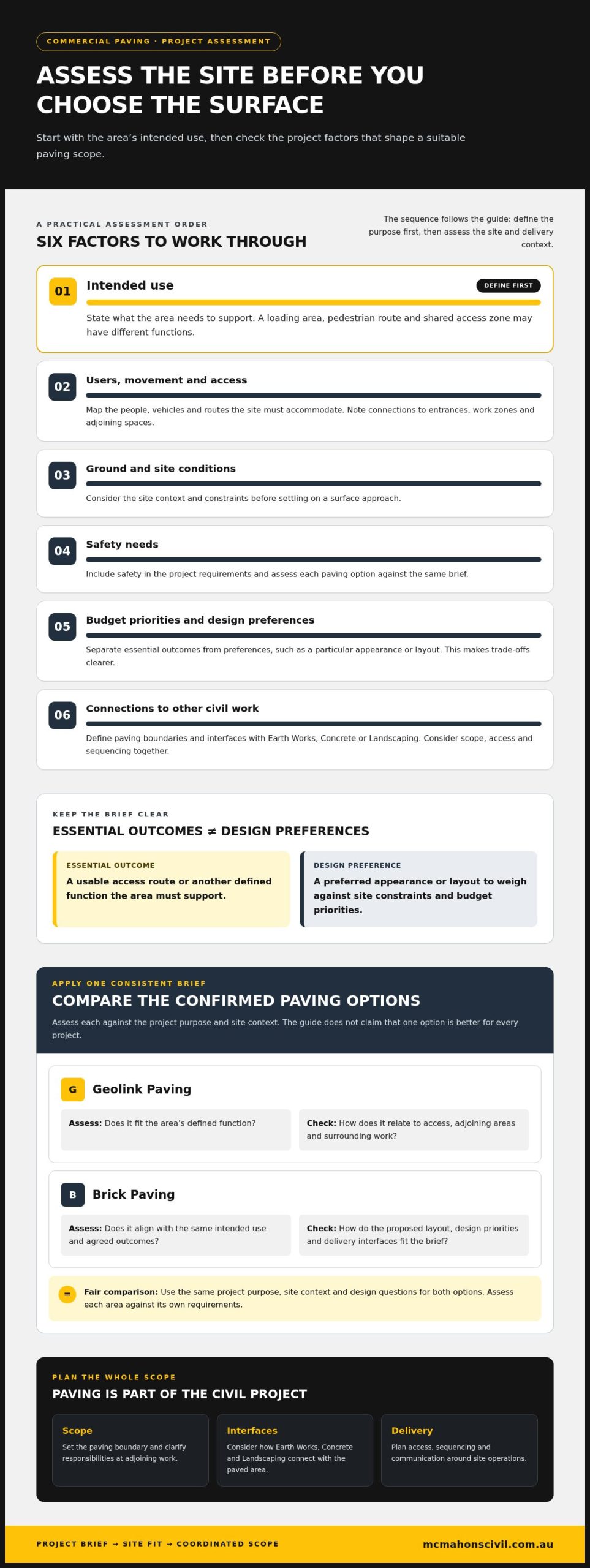
Plan commercial paving delivery around scope, access and coordination
Good delivery planning turns the selected paving approach into a clearly defined package of work. Set out what the project includes, how the paved area connects with adjoining work, how access will be managed and who needs to stay informed. Staging and access arrangements depend on site operations, the work taking place around the area and the project’s priorities.
What information belongs in a commercial paving brief?
Build the brief from known project information. State the area’s purpose, site context and intended use, then record constraints that could affect the work, such as access requirements or coordination with other activities. Describe the paving scope and where it meets planned civil works. Keep confirmed requirements distinct from assumptions so the team can see what is settled and what needs further discussion.
A concise brief might record:
- Project purpose: What the paved area is intended to support.
- Site context: The area’s position within the site, relevant boundaries and operating conditions.
- Scope: The paving work included and its relationship to adjoining work packages.
- Constraints and assumptions: Known access or coordination considerations, clearly separated from items not yet established.
This record gives stakeholders and delivery teams a shared reference point. It also helps keep commercial paving solutions aligned with the agreed scope if project details change. Update the brief when a decision affects responsibilities, access or the sequence of work, rather than relying on informal conversations alone.
How can teams coordinate paving with related civil works?
Map the interfaces between paving and relevant work packages before delivery begins. Earth Works may relate to the wider site scope, while Concrete and Landscaping may meet or adjoin the paved area. Identify where one package ends, where another begins and who is responsible for communicating changes that affect the interface. The scope and sequence will depend on the project.
Use an ordered planning sequence:
- Define the scope. Record what the paving includes, its limits and the project outcomes it must support.
- Map the interfaces. Note connections with Earth Works, Concrete, Landscaping and other relevant planned work.
- Plan access. Set out how people and work activities can reach the area, taking site operations and staging into account.
- Align communications. Agree who shares updates, records decisions and informs affected teams when plans change.
Clear responsibilities help teams coordinate without assuming that every project will follow the same staging plan. McMahons Civil and Contracting provides paving alongside broader civil capabilities, including Earth Works, Concrete and Landscaping, supporting a joined-up discussion of related work packages.
With the scope and interfaces outlined, discuss your commercial paving project as part of the wider delivery plan.
McMahons Civil and Contracting: commercial paving within broader civil capability
McMahons Civil and Contracting provides commercial paving as part of its wider civil and contracting work, with Geolink Paving and Brick Paving among its services. A paved surface is often one part of a project that also involves site works and adjoining areas. Considering those connections early can help establish a clear scope and a coordinated project discussion.
The company also provides Earth Works, Concrete and Landscaping. Its stated experience includes over 18 year’s Experience. These capabilities can be considered alongside paving when a project includes related work, with scope and responsibilities defined for the specific project.
A paving scope supported by broader civil-construction capability
When a project includes paving and related civil work, identify how each package meets the next. Earth Works may form part of the wider site scope, while Concrete and Landscaping may also connect with paved areas. Defining boundaries, interfaces and communication responsibilities helps teams plan these activities together without assuming they need to be delivered as one contract or turnkey arrangement.
McMahons’ range of civil work provides a basis for discussing those connections. The company focuses on matching the scope to the site, with workmanship, reliability and safety informing its approach. For more on its civil contracting services, consider how paving relates to the other work included in your project.
What to include when starting a project discussion
Start with a concise outline of the project purpose, site context and intended use of the paved area, along with the scope already established and any known constraints. If Earth Works, Concrete or Landscaping are also part of the project, note where those activities meet the paving work and which responsibilities have already been agreed.
It can also help to distinguish confirmed requirements from assumptions. Record which areas are included in the proposed paving scope, which site details are known and which interfaces still need discussion. This gives the team a clear basis for considering Geolink Paving or Brick Paving in relation to the project, rather than relying on a generic solution.
McMahons emphasises workmanship, reliability, safety and a budget-driven professional service. Sharing the project context and priorities helps keep the discussion grounded in those considerations, without presuming a particular price or delivery outcome.
To take the next step, discuss your commercial paving requirements with McMahons.
Set your project up for a confident next step
A considered paving decision begins with a project brief that reflects how the site needs to work, not simply how the finished area should look. Use the priorities you have established to bring stakeholders onto the same page, highlight details that need resolution and give the delivery discussion a clear starting point.
This preparation turns commercial paving solutions from a broad choice into a practical conversation about your project. You do not need every detail settled before taking that step. An outline of the intended use, site context and desired scope can help focus the discussion and identify what needs to be worked through next.
McMahons Civil and Contracting takes a professional, budget-driven approach grounded in workmanship, reliability and safety. Share the project context and priorities to begin shaping a paving scope that fits the work ahead.
Share your project brief with McMahons to take the next step.
Frequently Asked Questions
What is included in a commercial paving solution?
A commercial paving solution defines the paved area, selected approach and work boundaries in line with the project brief. It can also set out how the surface connects with adjacent civil work and clarify responsibilities at the interfaces. McMahons provides Geolink Paving and Brick Paving alongside Earth Works, Concrete and Landscaping. The scope is shaped around the project rather than supplied as a fixed package.
How do I choose between Geolink Paving and Brick Paving?
Compare both options against the same criteria, including intended function, design requirements and site context. If a development has separate areas with different purposes, assess each area against its own brief rather than assuming one approach suits the entire site. McMahons provides both options, so the comparison can focus on how each fits the project requirements.
Can commercial paving be completed while a site remains operational?
Planning paving alongside ongoing site use depends on the project scope and operating conditions. Consider which routes need to remain available, whether activities can be separated by area and how changes will be communicated to site users. These points can inform staging, with the arrangement developed around the specific site.
What information should I provide when requesting a commercial paving discussion?
Share the project’s purpose, the paved area’s intended use and any known site constraints. A site plan or marked-up drawing can help show the area under consideration and its connection to surrounding spaces. Also note any related work already planned and distinguish agreed requirements from early preferences. This gives the discussion a useful starting point without requiring every design detail to be settled.
Does commercial paving need to be coordinated with earthworks?
Consider paving alongside earthworks when the scopes meet or affect the same project area. Identify who is responsible for decisions at the boundary between the paved section and adjoining site work, and record any sequencing assumptions. McMahons provides Earth Works as well as Geolink Paving and Brick Paving, so these related scopes can be considered together.
Can one contractor support paving and related civil works?
McMahons provides Geolink Paving, Brick Paving, Earth Works, Concrete and Landscaping. Set out which work packages are required and how they connect, then define the scope and responsibilities for the project. This makes it clear how the paving work relates to the wider civil works.